Picture this: a patient in the ICU suddenly loses their pulse. Monitors alarm. A nurse calls the code. Within seconds, a team converges, each person needing to know exactly what to do, in what order, with what medications, and how to communicate clearly under pressure. There is no time to look anything up. The outcome depends almost entirely on the preparation each provider brought into that room.
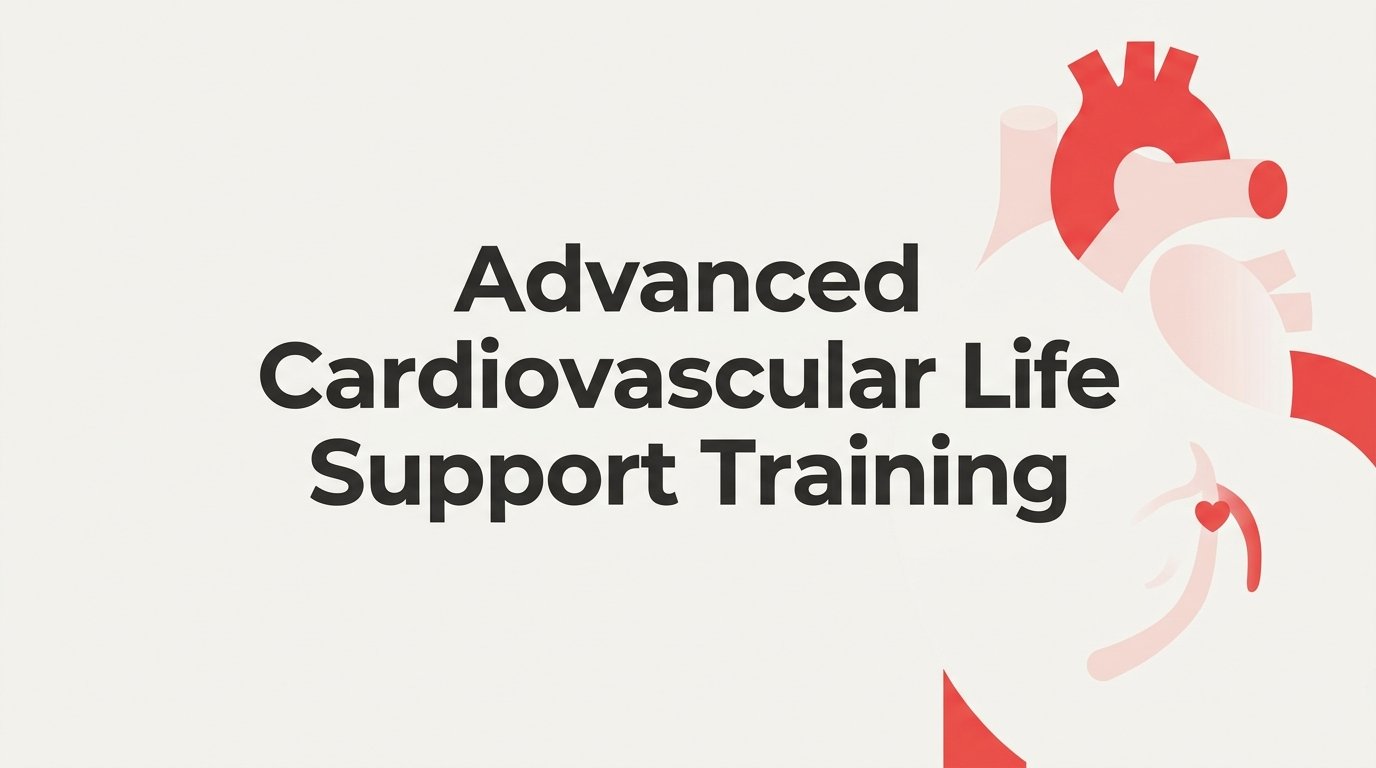
This is the reality that advanced cardiovascular life support training is designed to address. ACLS is not a theoretical credential. It is a practical, scenario-driven certification that equips healthcare professionals to manage the most critical moments in patient care with clinical precision and team coordination.
Whether you are a nurse preparing for your first ICU position, a paramedic renewing your certification, or a physician looking to understand your options for getting certified quickly, this article walks you through everything you need to know. You will learn what ACLS actually involves, who is required to hold it, how to choose a training format that fits your schedule, and how to keep your certification current over time.
The Foundation Behind the Certification
Advanced cardiovascular life support is a standardized set of clinical algorithms and skills developed and maintained by the American Heart Association. It builds directly on basic life support competencies, which is why most ACLS courses require current BLS certification as a prerequisite before enrollment.
Where BLS focuses on the fundamentals of CPR, rescue breathing, and the use of an AED, ACLS moves into considerably more complex territory. Think of BLS as the foundation and ACLS as the clinical structure built on top of it. The jump from one to the other is meaningful. If you want to strengthen that foundation before pursuing ACLS, reviewing a basic life support course is a smart first step.
ACLS introduces pharmacology, meaning providers learn which resuscitation medications to use, when to use them, and at what doses during a cardiac arrest or related emergency. It also covers advanced airway management techniques that go beyond the basic positioning and mask ventilation taught in BLS. Providers learn to support airways in ways that are appropriate for clinical settings where intubation and supraglottic airways may be in play.
Cardiac rhythm interpretation is another core distinction. ACLS providers must be able to look at a cardiac monitor and quickly identify rhythms such as ventricular fibrillation, ventricular tachycardia, pulseless electrical activity, and asystole, then apply the correct algorithm for each. This requires a level of electrocardiogram literacy that BLS simply does not address.
Perhaps most importantly, ACLS emphasizes team-based resuscitation. Real cardiac emergencies are not solo events. They involve multiple providers working simultaneously, and the quality of communication between those providers directly affects the outcome. ACLS training teaches providers to function effectively both as team leaders and as team members, using structured communication patterns to reduce errors when the stakes are highest.
The American Heart Association plays a central role in this framework. The AHA develops and periodically updates ACLS guidelines based on the latest resuscitation science, ensuring that the protocols providers learn reflect current evidence. Certification from an AHA-authorized training center carries professional weight precisely because it signals alignment with those evidence-based standards. Employers, credentialing committees, and licensing boards recognize AHA certification because they trust the rigor behind it.
Inside an ACLS Course: Skills, Scenarios, and Structure
Understanding what actually happens during ACLS training helps providers arrive prepared and get the most out of the experience. The content is substantive, the pace is hands-on, and the scenarios are designed to feel as realistic as possible.
The core clinical content covers several interconnected areas. Providers work through the recognition and management of cardiac arrest rhythms, learning to identify each rhythm on a monitor and apply the appropriate ACLS algorithm. This includes shockable rhythms like ventricular fibrillation and pulseless ventricular tachycardia, as well as non-shockable rhythms like pulseless electrical activity and asystole. A thorough ACLS algorithm study guide can help providers build this recognition fluency before the course begins.
Beyond cardiac arrest, the course addresses peri-arrest rhythms, which are the unstable rhythms that can precede or follow a full arrest if not managed correctly. Providers also learn to recognize and respond to acute coronary syndromes, including the early management steps for suspected myocardial infarction. Stroke recognition and initial response are included as well, along with post-cardiac arrest care, which covers what happens after return of spontaneous circulation and why that phase of care matters for patient survival and neurological recovery.
Hands-on skills stations are a defining feature of ACLS training. Participants do not simply watch demonstrations or answer multiple choice questions. They practice airway management techniques, work through medication administration scenarios, and operate as part of simulated resuscitation teams. The megacode scenario is the capstone of this skills practice, placing providers in a realistic cardiac arrest simulation where they must apply algorithms, manage team dynamics, and communicate effectively under pressure.
Closed-loop communication is practiced deliberately throughout these scenarios. This means that when a team leader gives an order, the team member receiving it repeats it back, confirms completion, and reports the result. This structured communication pattern significantly reduces the errors that can occur when multiple people are working quickly and simultaneously.
It is worth understanding the difference between an initial ACLS certification course and a renewal course. Initial certification is designed for providers who have not previously held ACLS or whose certification has lapsed significantly. These participants typically spend more time on foundational content and algorithm review. Renewal courses, by contrast, assume that participants already have a working knowledge of ACLS and focus on updated guidelines, refreshed skills, and any changes to protocols since the previous certification cycle. Renewal courses are generally shorter but still require active participation and demonstrated competency.
Who Is Required to Hold This Credential
ACLS certification is not a universal requirement for every healthcare worker, but it is a professional necessity for a wide range of clinical roles. Understanding where the requirement applies helps providers anticipate what will be expected of them as they move through their careers.
Emergency medicine physicians are among the most obvious holders of ACLS certification, given that cardiac and respiratory emergencies are a routine part of emergency department work. Hospitalists, who manage acutely ill patients across general hospital floors, are also commonly required to hold current certification, since they may be the first responder when a code is called on a patient outside of the ICU. Providers looking for a deeper breakdown of what this credential means for their specialty can review the dedicated guide on ACLS for physicians.
Nurses working in intensive care units and emergency departments almost universally need ACLS. These environments see the highest concentration of patients at risk for cardiac events, and the expectation is that every nurse on the unit can function as a skilled member of a resuscitation team. Respiratory therapists, who play a critical role in airway management during codes, are similarly expected to hold ACLS in most hospital settings.
Paramedics and advanced EMTs in many jurisdictions are required to maintain ACLS certification as part of their licensure or employer credentialing. Anesthesiologists and certified registered nurse anesthetists, who routinely manage airways and monitor hemodynamics in high-risk patients, also commonly hold this certification. Surgical teams operating in environments where cardiac events can occur during procedures are another group for whom ACLS is standard.
The requirement does not always originate from a single source. Employer requirements, hospital credentialing committees, and state licensing boards may each independently mandate current ACLS certification for certain positions. Providers are encouraged to check ACLS certification requirements across all of these channels, since a hospital's credentialing standards may be more stringent than what state licensure alone requires.
It is also worth noting that the requirement extends beyond traditional hospital settings. Urgent care centers, outpatient surgical facilities, dialysis clinics, and cardiac catheterization labs may all require ACLS for staff who could plausibly encounter a cardiac emergency during their shift. As healthcare delivery continues to shift toward outpatient environments, the reach of this certification continues to expand.
Choosing the Right Training Format for Your Schedule
One of the most practical decisions a provider makes when pursuing advanced cardiovascular life support training is choosing the format that works best for their schedule, learning style, and professional context. There is no single right answer, and the options have expanded considerably in recent years.
Traditional in-person classroom training remains a strong choice for many providers. It offers real-time interaction with an instructor, immediate feedback during skills practice, and the opportunity to work through scenarios alongside peers. For providers who learn best through direct demonstration and group discussion, this format delivers a rich experience that is hard to replicate in other settings.
Blended learning options, such as the HeartCode ACLS format offered through the American Heart Association, combine online self-directed learning with an in-person skills check. Providers complete the cognitive portion of the course at their own pace online, then attend a shorter in-person session to demonstrate their skills and receive their certification. This format appeals to busy clinicians who want flexibility in when and where they complete the didactic content.
Onsite group training is a highly efficient option for hospitals, clinics, urgent care centers, and other healthcare organizations that need to certify multiple staff members at once. Rather than sending employees to an external location on varying schedules, organizations can bring a qualified instructor to their facility and certify an entire team in a coordinated session. Understanding how to coordinate group CPR training sessions can help organizations plan this process efficiently and minimize workflow disruption.
One-on-one instruction is a format that deserves more attention than it typically receives. For providers who have scheduling constraints that make group courses difficult, who have physical limitations that require accommodations during skills practice, or who simply prefer a personalized learning pace, individual instruction offers significant advantages. Working directly with an instructor means that the course adapts to the learner rather than the other way around. Questions get answered in real time, and skills practice can be repeated until the provider feels genuinely confident. Providers interested in this approach can learn more about the benefits of one on one CPR training and how it compares to group formats.
Best Emergency Services Training offers all of these formats, including one-on-one home instruction for providers who need the most flexible option available. The goal is to make certification accessible regardless of the logistical challenges a provider faces.
Keeping Your Certification Current
ACLS certification through AHA-authorized centers is valid for two years. When that window closes, providers need a recertification course, not simply a retest or an online module. This distinction matters because the renewal process involves demonstrated skills competency, not just a knowledge check.
Renewal courses are structured differently from initial certification courses. They assume a baseline of existing ACLS knowledge and focus on two primary areas: any updates to AHA guidelines that have occurred since the previous certification cycle, and refreshed hands-on skills practice to ensure that providers remain sharp on the techniques they may not use every day. The megacode component is still part of renewal, because demonstrated competency under simulated pressure remains the standard regardless of how many times a provider has been through the course. Providers searching for convenient options can find guidance on locating ACLS recertification near me to identify authorized centers in their area.
Tracking renewal deadlines is a practical skill that providers need to develop early in their careers. A common approach is to set a calendar reminder several months before the certification expiration date, giving enough lead time to find a course, schedule it, and complete it without rushing. Many employers also track certification expiration dates and will notify employees in advance, but relying solely on an employer reminder is a risk worth avoiding.
It is worth understanding your employer's grace period policy, if one exists. Some hospitals and healthcare organizations allow a brief window after expiration during which a provider can continue working while completing renewal. However, this is not universal, and some credentialing committees require continuous current certification with no gap. Knowing your organization's specific policy before your certification lapses is far better than discovering the policy after the fact.
If certification has already lapsed, the path forward depends on how long ago it expired. Providers whose certification lapsed recently may be able to take a renewal course. Those who have been out of certification for an extended period may need to complete an initial course again. The best approach is to contact a training center directly and describe the situation so they can recommend the appropriate course.
Getting Certified Through Best Emergency Services Training
Best Emergency Services Training is an AHA-authorized training center offering advanced cardiovascular life support training in formats designed to fit the realities of a healthcare professional's schedule. Whether you are pursuing initial certification or renewing before your deadline, the options are built around your needs rather than a fixed classroom schedule.
Multiple offsite locations make it straightforward for providers who want to attend a course at a convenient facility. For organizations that need to certify a team, onsite group training brings the course directly to your hospital, clinic, or facility, allowing staff to complete certification together without the logistics of sending everyone to an external location on different days.
For providers who need the most personalized experience, one-on-one home instruction is available. This format is particularly valuable for those with physical limitations, irregular work schedules, or a preference for learning at their own pace with an instructor's full attention. The course content and AHA standards remain exactly the same; what changes is the environment and the level of individualized support.
The team at Best Emergency Services Training is committed to making the certification process as smooth and stress-free as possible. That means clear communication about what to expect, flexible scheduling that accommodates shift workers and busy clinicians, and instruction that supports both first-time candidates and experienced providers coming in for renewal.
If you are not sure which format is right for your situation, reaching out with questions is always a good first step. The team can help you identify the course type that matches your current certification status, your schedule, and any specific needs you have as a learner.