CPR & Medical Training Blog
Expert insights on CPR certification, AHA guidelines, EMT training, and emergency preparedness in North Carolina.
Healthcare Provider Life Support Training: Which Course Fits Your Role
Healthcare provider life support training comes down to BLS, ACLS, and PALS, and the right course depends on your role, your patients, and your employer's requirements. This guide compares what each course teaches, who needs it, how class formats and renewals work, and how to verify a legitimate provider before you pay.
How to Set Up Onsite Medical Training for Organizations: A Step-by-Step Guide
This step-by-step guide shows how to set up onsite medical training for organizations, from sorting staff by role and choosing the right American Heart Association courses to building a realistic schedule and headcount. You'll finish with a booked, well-organized session and a clear plan for tracking certifications.
7 Strategies for Flexible Scheduling for Medical Certifications
Healthcare professionals often struggle to fit BLS, ACLS, and PALS renewals around rotating shifts and overtime. This guide shares seven practical strategies for flexible scheduling for medical certifications, from building a renewal calendar around card expiration dates to tracking progress, so you renew on time without a rushed booking or a lapse.
BLS Assessment Skills Testing Criteria: What Instructors Look For in Your Skills Test
The BLS skills test is graded against a fixed AHA checklist, not an instructor's impression, which makes it highly predictable. This guide breaks down the BLS assessment skills testing criteria, including station structure, the critical steps you must perform in order, the compression rate, depth, recoil, and ventilation benchmarks to hit, and practical ways to prepare so you pass with confidence.
7 Strategies to Get and Keep CPR Certification for Dentists
A practical guide to cpr certification for dentists.
How to Create a CPR Training Record Template for Your Staff or Organization
This step-by-step guide shows you how to build a reusable CPR training record template for your staff or organization. You'll set up a spreadsheet with expiration formulas, color-coded status flags, and a regular review routine that catches certification lapses before they happen.
Workplace CPR Certification Requirements: Who Needs Training and What Employers Must Know
Workplace CPR certification requirements depend on your industry, state, and job role, since no single federal law mandates training for every worker. This guide breaks down OSHA's conditional first aid rule, the jobs that typically need a card, which courses are accepted, and how employers can build a defensible training program.
7 Strategies to Fast Track Medical Certification Courses Without Cutting Corners
Certification deadlines often arrive with little warning, but speed and legitimacy can go together. This guide shares seven strategies to fast track medical certification courses, from confirming exactly which credential your employer requires to choosing the right format and scheduling early, so you earn a card that is accepted the first time.
Pediatric Emergency Response Certification: Which Course Fits Your Role
Pediatric emergency response certification is not a single credential but a group of courses, including AHA PALS, BLS, Heartsaver Pediatric First Aid CPR AED, and NAEMT offerings. This guide matches each course to roles like nurse, daycare teacher, and parent, and explains formats and how to renew without a lapse.
How to Follow the Emergency Medical Technician Certification Path From Start to Finish
A practical guide to emergency medical technician certification path.
9 Best ACLS Certification Providers Compared for Healthcare Professionals in 2026
Comparing ACLS certification providers is easier when you weigh card issuer, course format, hands-on skills verification, cost, scheduling, and employer acceptance. This 2026 guide reviews nine options for nurses, physicians, paramedics, and training managers, and reminds readers to confirm which cards their employer or licensing board accepts before paying.
What Is Included in ACLS Training? A Clear Look at Course Content, Skills, and Certification
Find out what is included in ACLS training, from rhythm recognition, emergency medications, and airway management to team leadership. This guide explains the hands-on skills test, the written exam, how course formats differ, and how to prepare before you enroll so you can certify with confidence.
How to Renew Your Healthcare Certification Expiring Soon Without Losing Work Eligibility
A healthcare certification expiring soon doesn't have to cost you shifts or clinical privileges. This guide walks through confirming your exact expiration date, choosing the right BLS, ACLS, or PALS renewal course, and getting your new card to your employer on time.
7 Strategies to Get the Most from Group Medical Training for Staff
Group medical training for staff is easy to schedule but hard to do well. This guide gives managers, practice owners, and HR leads seven strategies for BLS, ACLS, PALS, and CPR/AED sessions, from auditing who needs which certification to sending renewal reminders, so training builds real readiness instead of just checking a box.
How Much Does PALS Certification Cost? A Clear Breakdown of Fees and What Affects Them
How much does PALS certification cost? Most AHA courses run roughly $150 to $400 in 2026, depending on whether you take an initial or renewal class, an in-person or blended format, and which training center you choose. This guide breaks down the fees, flags extras like manual and retest charges, and helps clinicians pay once for a card their employer will accept.
Medical Certification Documentation Requirements: What Healthcare Professionals Need to Prove and Keep
A practical guide to medical certification documentation requirements.
7 Strategies to Understand ACLS vs PALS Training Differences and Choose the Right Course
This guide breaks down the ACLS vs PALS training differences, covering patient populations, assessment methods, drug dosing logic, and megacode scenarios. Seven practical strategies help healthcare professionals decide whether they need ACLS, PALS, or both, based on their patients, employer requirements, and schedule. It aims to prevent wasted course fees and rejected cards.
How to Get Back on Track If You Forgot to Renew Your Medical Certification
A practical guide to forgot to renew medical certification.
OSHA Medical Emergency Response Training: What Employers Must Provide and How to Meet It
OSHA has no single rule requiring every employer to provide osha medical emergency response training, but standards like 29 CFR 1910.151(b) and 1926.50 require trained first aid responders when professional medical help is not nearby. This guide explains where the duty comes from, how to assess your own site, what training should cover, and how to build a program that holds up.
Employee Medical Training Compliance Requirements: What Employers Must Know About CPR, BLS, and First Aid
Employee medical training compliance requirements depend on your industry, state, and workplace hazards rather than one national rule. This guide separates OSHA's federal first aid baseline from stricter demands set by licensing boards, accreditors, and insurers, maps common roles to the right CPR, BLS, and first aid courses, and shows how to build a program that holds up under audit.
7 Strategies to Choose Between Online vs In Person CPR Certification
This article outlines 7 strategies to help healthcare professionals and everyday learners decide between online vs in person CPR certification based on employer requirements, license board rules, and learning needs. It explains why AHA provider-level courses require hands-on skills checks that fully online training can't satisfy alone.
How to Maintain CPR Certification Current Year-Round
This guide explains how to maintain CPR certification current year-round by tracking your expiration date, choosing the right renewal course, and building a simple system to avoid lapses. It covers BLS, Heartsaver, ACLS, and PALS renewal so healthcare professionals and workplace cardholders never get caught with an expired card.
7 Strategies to Find the Right Medical Certification Courses Near Me
This article outlines 7 practical strategies for finding medical certification courses near me that are properly accredited, cover the right scope of practice, and fit your schedule. It helps healthcare workers avoid wasting time and money on courses that won't satisfy employer or licensing requirements.
The Fastest Way to Get BLS Certified
This guide reveals the fastest way to get BLS certified by pairing an AHA blended learning course with a same-day or next-day skills session, so you can earn a valid card in as little as one day. It also covers what to prepare beforehand and which course format saves the most time.
Onsite Medical Training for Businesses: What It Is and How It Works
This guide explains how onsite medical training for businesses works, covering which certifications qualify, how sessions are scheduled, and how companies can prepare so an instructor can train the whole team on-site without disrupting the workday.
7 Strategies to Build Effective CPR Training for Dental Office Staff
This article outlines seven practical strategies for building effective CPR training for dental office staff, helping practices match certification levels to real risk and rehearse dental-specific emergency scenarios. It gives dentists and office managers a framework for keeping their teams prepared between certification renewal cycles.
Group CPR Training Scheduling Challenges (And How to Solve Them)
This article examines the group cpr training scheduling challenges that make team recertification so difficult, from staffing ratios to mismatched expiration dates, and offers practical strategies to simplify the process for whoever manages it.
What Happens If You Don't Have CPR Certification at Work?
This article explains the no CPR certification consequences at work, covering which jobs actually require certification, the job and licensing risks of skipping it, and how to quickly become compliant.
How to Get CPR Certification for Daycare Providers
This guide walks daycare workers and in-home providers through getting Cpr Certification For Daycare Providers, covering state licensing requirements, course selection, and how to get certified quickly through Best Emergency Services Training.
7 Pediatric Life Support Training Options to Fit Your Career Needs
This article breaks down seven pediatric life support training options, from traditional classroom courses to blended and mobile formats, helping healthcare professionals choose the certification path that best fits their schedule and role.
Medical Assistant CPR Requirements: What You Need to Know
This guide explains medical assistant CPR requirements, clarifying why BLS certification through the American Heart Association is typically required and how the rules can shift by state, employer, and job setting.
How to Choose a CPR Training Provider
This guide explains how to choose a CPR training provider by first identifying the certification you actually need, then evaluating accreditation and course quality. Following these steps helps you avoid enrolling in the wrong course and having your certification rejected by an employer or licensing board.
7 Strategies to Get the Most from Private CPR Instruction at Home
This article outlines seven practical strategies for getting real skill development and a valid, verifiable credential from private CPR instruction at home, starting with confirming the instructor's AHA-aligned curriculum and credentials.
Individualized CPR Instruction Benefits: Is One-on-One Training Worth It?
This article breaks down the individualized cpr instruction benefits of one-on-one training, showing how personalized pacing and instructor attention speed up skill mastery compared to group classes. It also outlines who benefits most from private sessions so readers can choose the right certification format.
7 Strategies to Find Top Rated BLS Training Courses
This guide breaks down seven practical strategies for identifying top rated BLS training courses, from confirming current AHA guideline compliance to spotting red flags that separate genuine quality providers from marketing hype. Readers get a quick, actionable checklist to vet a course in minutes before registering.
How to Pass the ACLS Exam First Try
This guide explains how to pass the ACLS exam first try by walking through algorithm review, drug dosing logic, and megacode preparation in the order instructors actually test them. It's built for candidates already enrolled in an ACLS course who want a structured, no-guesswork path to certification success.
What Is Basic Life Support Certification?
This article explains what Basic Life Support certification is, detailing what the AHA course covers, who is required to hold it, and how it differs from Heartsaver, ACLS, and PALS training.
8 Strategies to Find Flexible Schedule Medical Certification Courses
This article outlines 8 practical strategies for finding flexible schedule medical certification courses, showing shift workers, EMS providers, and office managers how to arrange AHA-aligned BLS, ACLS, PALS, and CPR training around real-world calendars instead of rigid class schedules.
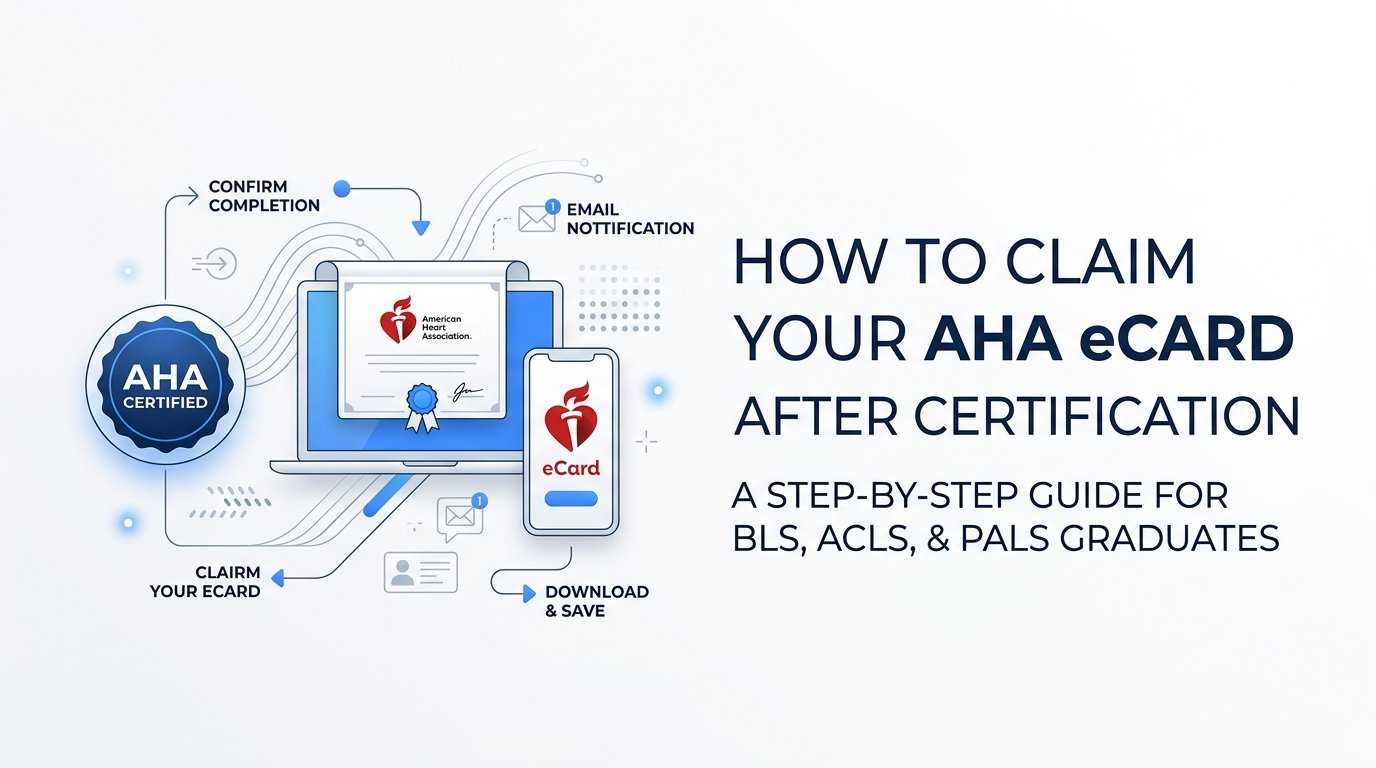
How to Claim Your AHA eCard After Certification
This guide walks new BLS, ACLS, and PALS graduates through how to claim your AHA eCard, from confirming course completion with an instructor to downloading and saving the official card for employers. It also highlights the common email and roster errors that keep students from receiving their eCard on time.
Mobile CPR Training for Businesses: How It Works and What to Expect
Mobile CPR training for businesses brings a certified instructor directly to the workplace, letting companies certify staff in waves without shutting down operations or losing a day to offsite travel. This guide explains how onsite scheduling works and what employers should expect from the process.
How to Prepare for PALS Certification: A Step-by-Step Guide
This guide walks healthcare professionals through six practical steps on how to prepare for PALS certification, covering key topics like pediatric assessment, respiratory distress recognition, shock management, and cardiac arrest algorithms. With the right preparation strategy, clinicians can arrive at their PALS course confident and fully ready to succeed.
7 Proven Strategies to Find Same Day CPR Certification Available Near You
When job offers, clinical rotations, or compliance deadlines leave no time to spare, same day CPR certification available through the right providers becomes a practical necessity. This article outlines seven actionable strategies for finding and securing a legitimate, American Heart Association-recognized CPR certification on the very day you need it.
ACLS Certification Requirements for Paramedics: What You Need to Know
ACLS certification requirements for paramedics go far beyond holding a card — they represent a core standard of readiness that employers, state EMS agencies, and medical directors expect throughout a paramedic's career. This article breaks down every step of the process, from enrollment prerequisites and course structure to renewal windows and state-specific compliance, so paramedics at any stage can stay prepared and confident on every call.
PALS Certification for Pediatric Nurses: A Step-by-Step Guide
PALS Certification for Pediatric Nurses is a step-by-step guide designed to help pediatric nurses navigate every stage of the PALS process — from understanding course content and BLS prerequisites to passing skills stations, submitting their certification card, and planning ahead for renewal. Whether pursuing a first certification or returning after a busy two-year cycle, nurses will find clear, sequential answers to their most pressing questions.
7 Best Strategies for Onsite CPR Training for Employees
Onsite CPR training for employees brings certified instructors directly to your workplace, eliminating the scheduling conflicts and travel barriers that prevent organizations from keeping their workforce prepared for cardiac emergencies. This guide outlines seven proven strategies to help any organization plan, coordinate, and sustain an effective onsite CPR training program.
CPR Skills Evaluation in Fayetteville: What to Expect and How to Prepare
A CPR certification card proves you completed a course, but a skills evaluation proves you can perform under observation — and for Fayetteville's large healthcare workforce and community members alike, that distinction matters. This article walks through what evaluators assess during a CPR skills evaluation in Fayetteville, what common technique errors to watch for, and how to prepare so your skills hold up when it counts.
What Is BLS Certification? A Complete Guide for Healthcare Professionals
BLS certification is a clinical-level credential required for healthcare providers and trained responders, issued by recognized bodies like the American Heart Association. This guide explains what is BLS certification, how it differs from a standard CPR course, who needs it, and how to obtain or renew it efficiently.
7 Best CPR Certification Programs: How to Choose the Right One for Your Needs
Finding the best CPR certification programs requires more than a quick Google search — the right choice depends on your professional role, credential level, scheduling needs, and employer requirements. This guide breaks down seven top programs and the key strategies for evaluating accreditation, course format, and cost so you can train with confidence.
BLS Provider Course Study Guide: How to Prepare and Pass with Confidence
This BLS Provider Course Study Guide gives healthcare professionals — from nurses to emergency responders — a clear, step-by-step path to mastering AHA BLS algorithms, critical numbers, and hands-on skills. Whether you are a first-time candidate or renewing an expired certification, these seven proven preparation strategies are designed to help you pass with genuine confidence.
Why Do Healthcare Workers Need BLS Certification?
Healthcare workers need BLS certification because cardiac and respiratory emergencies strike without warning, demanding an immediate, skilled response from whoever is present. This article explains what BLS training covers, why it is required across clinical roles, how it differs from standard CPR, and the real consequences of letting certification lapse.
7 Proven Strategies to Choose the Right Medical Assistant Certification Courses
Choosing the right Medical Assistant Certification Courses is a pivotal decision that shapes your healthcare career, employer confidence, and patient care quality. This guide presents seven proven strategies to help aspiring and current clinical professionals evaluate accreditation, program formats, and scheduling demands so they can select and complete the best certification path with confidence.
How Often to Renew BLS Certification: A Complete Guide for Healthcare Professionals
BLS certification through the American Heart Association is valid for two years, but knowing the renewal timeline is just the starting point. This guide walks healthcare professionals through the full renewal process — from scheduling and format options to what happens if your certification lapses — so you can stay compliant and confident in your credentials.
7 Proven Strategies to Choose the Right CPR Certification in Raleigh
Not all CPR certification programs in Raleigh are created equal — the wrong choice can mean credentials your employer or licensing board won't accept. This article walks through 7 proven strategies to help nurses, teachers, parents, and business owners find accredited, hands-on CPR certification in Raleigh that fits their schedule and professional requirements.
How to Get Your Heartsaver CPR AED Certification in Fayetteville: A Step-by-Step Guide
The American Heart Association Heartsaver CPR AED course in Fayetteville gives everyday people and non-clinical professionals the hands-on skills to respond confidently to cardiac emergencies. This step-by-step guide covers everything you need to know — from what the course includes to how to enroll and earn your certification.
7 Proven Strategies to Make Your PALS Recertification Course Work for You
This article presents seven practical strategies to help pediatric healthcare providers get the most out of their PALS recertification course — from leveraging existing clinical experience to improving retention and scheduling smarter. Whether you work in a pediatric unit, emergency department, or critical care setting, these approaches are designed to reduce stress and build lasting competency between certification cycles.
PALS Certification for Nurses: A Step-by-Step Guide to Getting Certified
PALS Certification for Nurses is a required credential for nurses in pediatric, emergency, and acute care settings, equipping them to respond to life-threatening emergencies in infants and children. This guide walks nurses through every step of the process — from confirming eligibility and selecting a course format to completing skills testing and receiving their American Heart Association certification card.
Group CPR Training Pricing: What to Expect and How to Plan Your Budget
Group CPR training pricing is not a one-size-fits-all number — it varies based on team size, course type, provider, and location. This guide breaks down every cost factor organizations need to understand so HR managers, school administrators, and business owners can plan an accurate training budget with confidence.
7 Proven Strategies for Effective CPR Training for Businesses
CPR training for businesses is more than a compliance requirement — it is a critical investment in workplace safety that requires a sustainable, ongoing strategy. This article outlines seven proven approaches to help HR managers and safety officers build effective, lasting CPR programs that keep employees genuinely prepared for cardiac emergencies.
One on One ACLS Training: What It Is and Why It Works for Healthcare Professionals
One on one ACLS training is a personalized alternative to group certification classes, designed to fit a healthcare professional's individual schedule, skill level, and knowledge gaps. This article breaks down how private ACLS sessions work, who benefits most from them, and what to look for when selecting a qualified provider.
Corporate Health and Safety Training: What It Is, Why It Matters, and How to Get It Right
Corporate health and safety training is far more than a compliance checkbox — it is a practical commitment to equipping employees with the skills to respond when emergencies strike. This guide walks decision-makers through what effective workplace safety training includes, which certifications matter most, and how to build a program that holds up long after the initial rollout.
How to Renew Your CPR Certification: A Step-by-Step Guide
This step-by-step guide explains how to renew CPR certification for healthcare professionals and everyday responders alike, covering course selection, preparation tips, and common pitfalls to avoid. Whether you hold a basic CPR card or a healthcare-level BLS credential, you'll find everything you need to stay certified, compliant, and ready to save a life.
7 Proven Strategies to Stop Struggling to Pass the ACLS Exam
Many healthcare professionals find themselves struggling to pass the ACLS exam due to predictable, correctable gaps in algorithm application, ECG recognition, and test-taking strategy. This article delivers seven practical, clinician-focused strategies designed to address those exact failure points and help busy providers earn their Advanced Cardiovascular Life Support certification efficiently.
What Is an American Heart Association Training Center and Why Does It Matter for Your Certification?
An American Heart Association Training Center is a credentialed provider authorized to issue AHA-recognized CPR and BLS certifications that hospitals, employers, and licensing boards accept. This guide explains what the designation requires, how the Training Center structure works, and why choosing the right provider can make or break the validity of your certification.
How to Get Your Pediatric Life Support Certification: A Step-by-Step Guide
This step-by-step guide walks healthcare providers through everything they need to know to earn and maintain their Pediatric Life Support Certification — from understanding prerequisites and preparing for skills stations to choosing the right training provider and knowing what to do if a retake is needed.
7 Best Strategies to Get CPR Training Quickly (Without Cutting Corners)
When you need CPR training quickly due to an employer deadline, a new healthcare role, or personal preparedness, fast certification does not have to mean low-quality training. This article outlines seven practical, AHA-aligned strategies to help you go from urgency to certified in the shortest time possible — without cutting corners.
ACLS Recertification Requirements: What Healthcare Professionals Need to Know
ACLS recertification requirements can feel overwhelming for busy healthcare professionals, but the process is straightforward once you understand the structure. This article breaks down certification validity periods, who must hold an active credential, and exactly how to renew before your ACLS lapses and affects your clinical eligibility.
7 Best Group CPR Training Options for Teams, Organizations, and Businesses
This guide breaks down seven proven Group Cpr Training Options to help businesses, schools, healthcare facilities, and community organizations build teams capable of responding confidently to cardiac emergencies. From on-site instruction to blended learning programs, readers will find practical guidance on choosing the right certification level, format, and provider to meet their group's size, scheduling, and compliance requirements.
How to Prepare for the ACLS Exam: A Step-by-Step Guide for Healthcare Professionals
This guide breaks down how to prepare for the ACLS exam into seven practical steps designed for working healthcare professionals, covering everything from rhythm recognition and drug dosage recall to hands-on team leadership practice. Whether you are a first-time candidate or renewing your certification, the focus is on building genuine clinical competence rather than surface-level test familiarity.
ACLS Certification Validity Period: How Long It Lasts and What Happens When It Expires
The ACLS Certification Validity Period determines how long healthcare professionals can practice under their Advanced Cardiovascular Life Support credential before renewal is required. This guide covers how long the certification lasts, why the validity window is structured the way it is, and what healthcare providers must do if their certification has already expired.
7 Smart Strategies for Hiring a Private CPR Instructor at Home
Hiring a Private Cpr Instructor At Home gives busy professionals, parents, and small business owners a flexible alternative to group CPR classes — delivering one-on-one, AHA-standard certification training at their location and on their schedule. This guide outlines seven practical strategies to help you choose the right provider, prepare your space, and walk away with life-saving skills that genuinely stick.
CPR Certification Requirements for Dentists: What You Need to Know
CPR certification requirements for dentists go beyond license renewal checkboxes — they represent a legal obligation and a critical clinical competency for managing life-threatening emergencies that can occur in any dental office. This guide breaks down what dentists need to know about staying compliant, choosing the right certification, and being genuinely prepared when seconds count.
PALS Certification Study Guide: How to Prepare and Pass with Confidence
This Pals Certification Study Guide provides a structured, step-by-step approach to preparing for the American Heart Association PALS exam, covering key pediatric emergency algorithms, assessment frameworks, and skills station strategies. Whether you are earning your certification for the first time or renewing it, this guide gives you a clear roadmap to study smarter and pass with confidence.
7 Proven Strategies for Effective Workplace CPR Training for Employees
Workplace CPR training for employees is one of the most critical investments an organization can make, bridging the gap between a cardiac emergency and a life saved. This guide outlines seven proven strategies to help businesses of all sizes build a compliant, effective, and lasting CPR-ready workforce.
Difference Between BLS and ACLS: Which Certification Do You Need?
Understanding the difference between BLS and ACLS is essential for healthcare professionals navigating certification requirements for the first time or advancing into higher-acuity roles. This article breaks down what each American Heart Association certification covers, who it's designed for, and how to determine exactly which credential your position requires.
How to Get Your ACLS Certification as a Nurse: A Step-by-Step Guide
Earning your ACLS certification for nurses is a critical step toward advancing your clinical career and meeting hospital credentialing requirements. This step-by-step guide covers everything nurses need to know — from eligibility and course selection to exam preparation — so you can complete your Advanced Cardiovascular Life Support certification with confidence.
7 Fastest Ways to Get CPR Certified (Without Cutting Corners)
This article outlines seven practical, proven strategies for earning a legitimate CPR certification as quickly as possible — whether you need it for a new job, a school requirement, or personal preparedness. From choosing the right course format to arriving ready on training day, each tip is designed to help you find the fastest way to get CPR certified without compromising the hands-on quality that makes the training meaningful.
One on One CPR Instruction: What It Is and Who It's Right For
One on one CPR instruction is a private training format designed for learners who need scheduling flexibility, a personalized pace, or a more comfortable alternative to large group classes. This article explains what private CPR training involves, who benefits most from it, and how to choose a provider whose certification will be recognized by employers and licensing boards.
What Happens If Your CPR Certification Lapses: Risks, Consequences, and Next Steps
A lapsed CPR certification can expose professionals to serious legal liability, disciplinary action, and job loss — but it is a fixable problem. This guide explains exactly what changes the moment your certification expires, what the consequences are, and how to get back into good standing as quickly as possible.
7 Proven Strategies to Get Your Same Day BLS Certification
Same day BLS certification is a fully legitimate, AHA-aligned pathway that healthcare professionals can complete in a single session — if they choose the right provider and prepare correctly. This article breaks down 7 proven strategies to help you walk away certified the same day, whether you're facing a job offer deadline, credentialing requirement, or license renewal.
How to Get CPR Certification for Dental Assistants: A Step-by-Step Guide
CPR certification for dental assistants is a professional requirement mandated by many state dental boards and employers, yet the path to getting certified can feel overwhelming. This step-by-step guide clarifies which course level fits your role, which certifying organizations are widely accepted, and how to manage the full process from enrollment through renewal.
Workplace CPR Training Requirements: What Employers and Employees Need to Know
Workplace CPR training requirements vary widely by industry, location, and employee role — from federal OSHA mandates to state-level healthcare and childcare standards. This guide breaks down exactly what employers and employees need to know to build a compliant, effective CPR training program.
7 Proven Strategies for Effective Onsite CPR Training for Businesses
This article outlines seven proven strategies to help businesses plan, implement, and sustain effective onsite CPR training for businesses of any size or industry. From assessing your workplace environment to building a lasting culture of preparedness, these actionable steps ensure your team is ready to respond when it matters most.
Pediatric Life Support Training: What It Is, Who Needs It, and How to Get Certified
Pediatric life support training equips healthcare providers and caregivers with the specialized skills needed to respond to child emergencies — because children's bodies and crises demand techniques distinct from adult resuscitation. This guide covers what the training involves, who needs it, and how to get certified.
CPR Training for Teachers: A Step-by-Step Guide to Getting Certified
CPR Training for Teachers walks educators through every step of getting certified — from selecting the right course to scheduling training around a busy school calendar. Whether meeting a new school requirement or refreshing lapsed skills, teachers will find practical guidance and flexible options to prepare for real classroom emergencies.
Hands On CPR Practice Sessions: What They Are and Why They Matter for Real-World Readiness
Hands on CPR practice sessions bridge the critical gap between theoretical knowledge and real-world capability, giving learners the guided manikin experience and instructor feedback needed to act confidently in a cardiac emergency. This article breaks down what these sessions involve, who benefits most, and how to choose the right training format for your situation.
American Heart Association Certified Instructors: What They Are and Why They Matter
American Heart Association Certified Instructors hold a rigorous, separately earned credential that authorizes them to teach AHA courses and issue the completion cards recognized by hospitals, employers, and licensing boards. This article explains what that credential requires, how instructors earn it, and why it directly affects the validity of your CPR or BLS certification.
How to Get ACLS Certified Quickly: A Step-by-Step Guide
This step-by-step guide shows nurses, physicians, paramedics, and other healthcare professionals how to get ACLS certified quickly — covering what to prepare before class, how to pick the right training format, and what to expect on test day — so you can earn your AHA card as efficiently as possible without sacrificing genuine clinical competency.
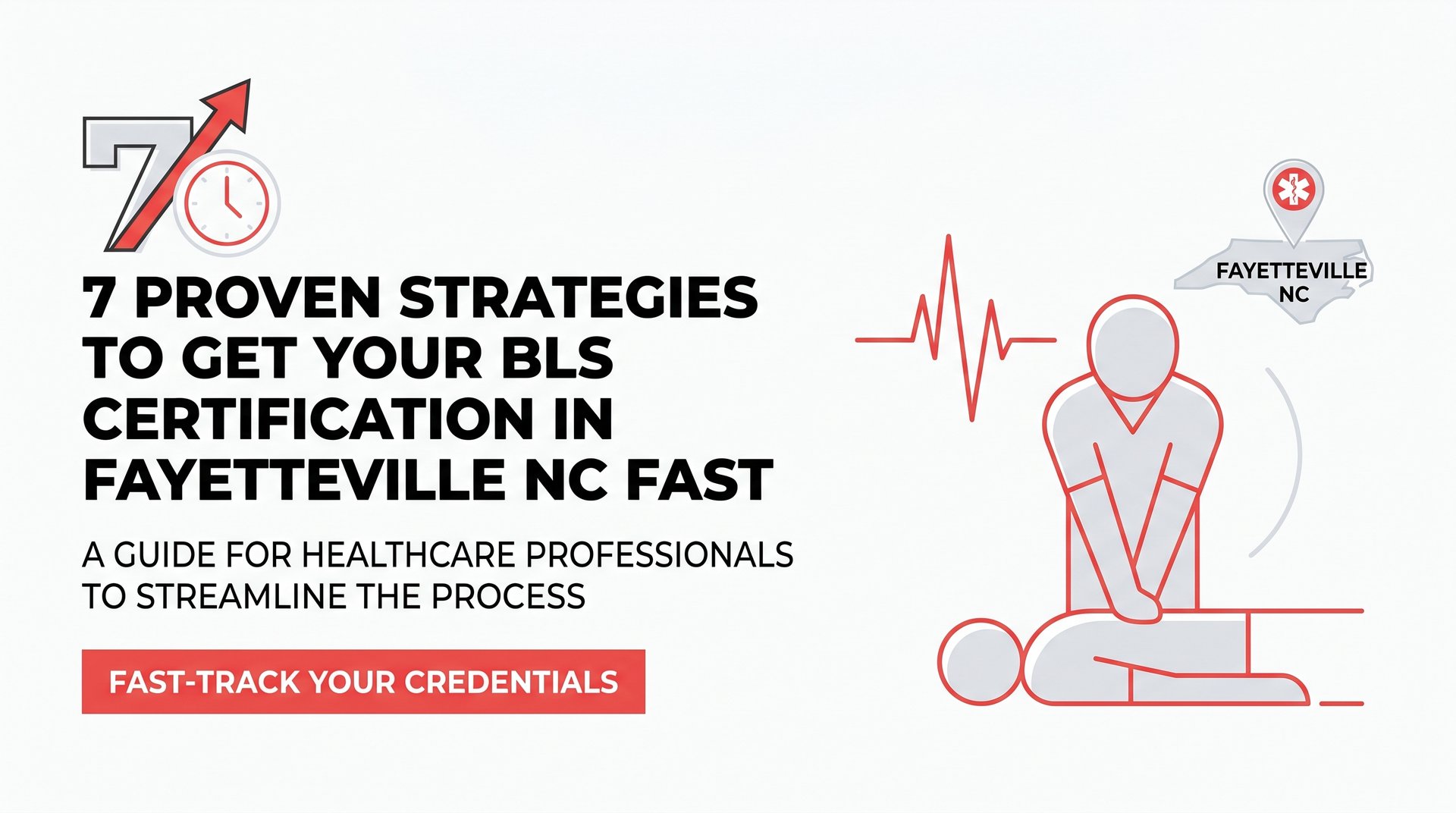
7 Proven Strategies to Get Your BLS Certification in Fayetteville NC Fast
Healthcare professionals seeking BLS certification in Fayetteville NC can streamline the process with seven practical strategies that address common challenges like scheduling conflicts, format selection, and group training needs. This guide helps nurses, paramedics, and other healthcare workers at facilities like Cape Fear Valley Health find the most efficient path to earning or renewing their Basic Life Support credentials.
7 Smart Strategies for Finding the Right CPR Class Near You
Finding the right CPR class near you goes beyond a quick search — it requires knowing how to evaluate accreditation, course types, and scheduling options to ensure your certification is valid and your skills hold up when it counts. This guide walks through seven proven strategies to help individuals and workplace coordinators make a confident, informed choice.
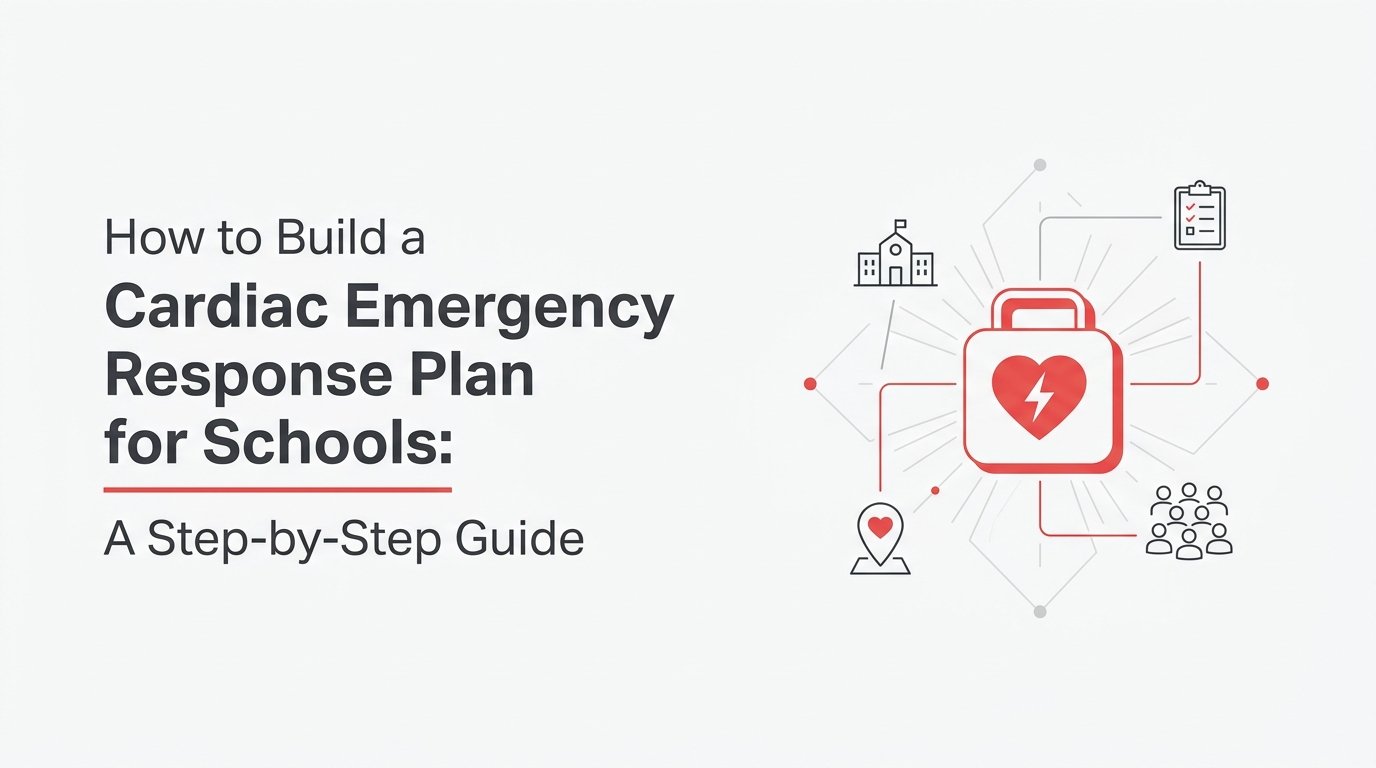
How to Build a Cardiac Emergency Response Plan for Schools: A Step-by-Step Guide
A Cardiac Emergency Response Plan For Schools is a structured, documented protocol that defines staff roles, AED placement, EMS activation, and training requirements to maximize survival outcomes during on-campus cardiac emergencies. This step-by-step guide helps school administrators, athletic directors, and safety coordinators build a legally sound and life-saving plan from the ground up.
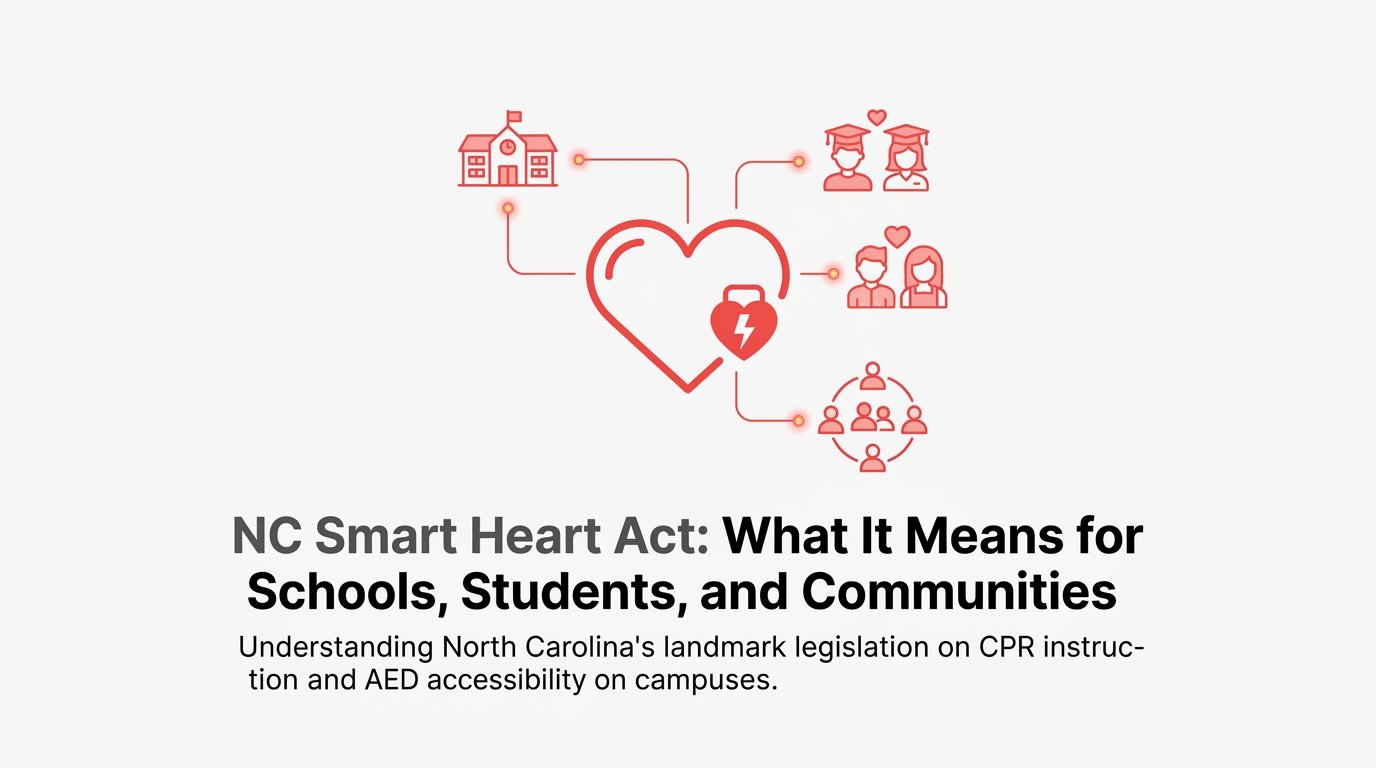
NC Smart Heart Act: What It Means for Schools, Students, and Communities
The NC Smart Heart Act is North Carolina's landmark legislation requiring schools to provide CPR instruction and ensure automated external defibrillators are accessible on campuses, giving students, educators, and staff the tools to respond to sudden cardiac arrest before emergency services arrive. This guide breaks down what the law requires, who it affects, and why it matters for schools, parents, coaches, and communities across the state.
BLS Certification Expired: What to Do Next (Step-by-Step Guide)
When your BLS certification expires, getting back into compliance is simpler than you might think. This step-by-step guide walks healthcare professionals through confirming their certification status, understanding renewal options, and scheduling a fast, flexible BLS renewal to get a valid card without delay.
CPR Certification for Healthcare Workers: What You Need to Know
CPR certification for healthcare workers involves navigating role-specific courses, validity periods, and scheduling options that directly impact both career compliance and patient outcomes. This guide clarifies which certifications apply to different clinical roles, how to maintain valid credentials, and how to find flexible training formats that fit demanding healthcare schedules.
7 Smart Strategies for Choosing CPR Training Organizations That Fit Your Needs
Choosing the right CPR training organizations can mean the difference between certification that truly builds life-saving confidence and one that prioritizes speed over skill retention. This guide outlines seven practical strategies to help healthcare professionals, business owners, and individuals evaluate and select a training provider that matches their scheduling needs, learning style, and certification requirements.
The Difference Between BLS and CPR: Which Certification Do You Actually Need?
CPR and BLS are related but distinct: CPR is a life-saving technique almost anyone can learn, while BLS is a professional certification that includes CPR plus additional clinical skills required in healthcare settings. This article clarifies the difference between BLS and CPR so nurses, employers, and job seekers can confidently choose the right credential.
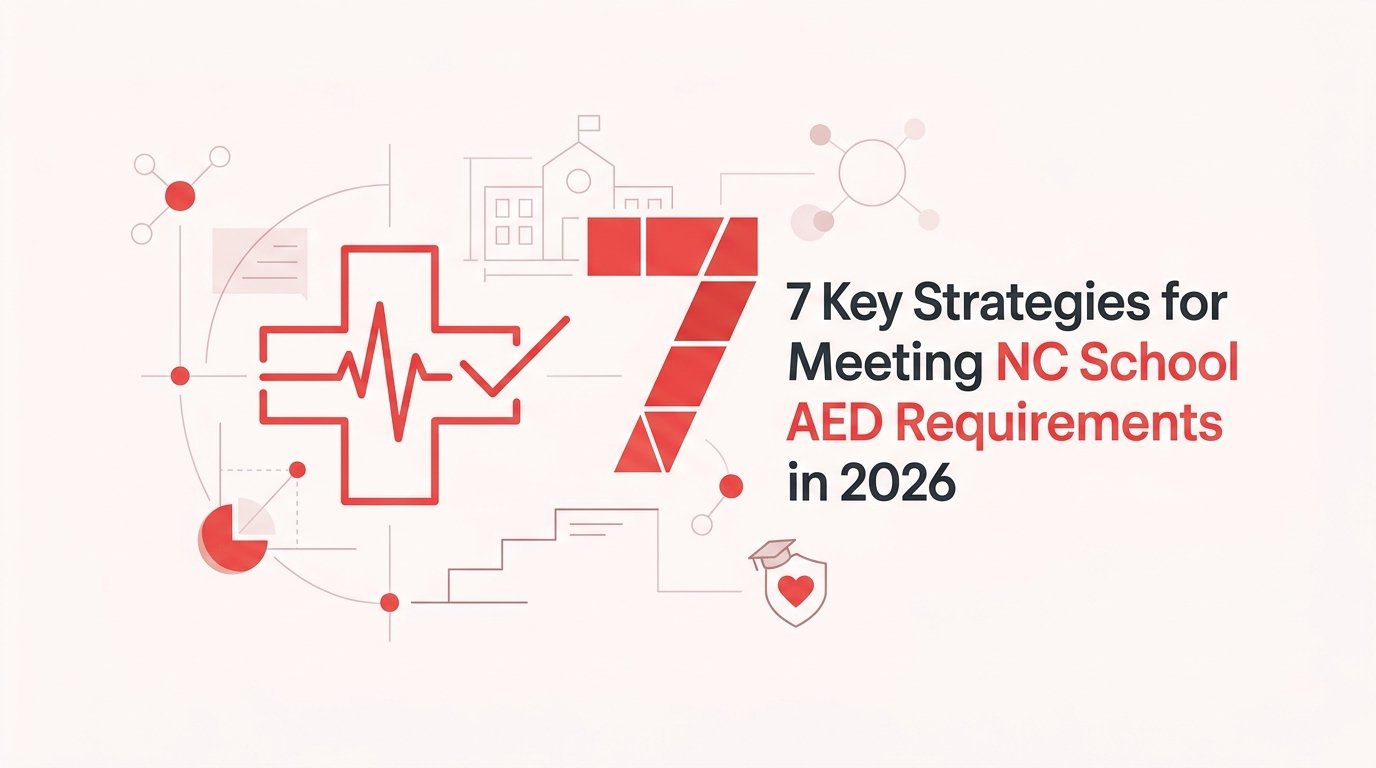
7 Key Strategies for Meeting NC School AED Requirements in 2026
North Carolina's Smart Heart Schools Act sets clear AED compliance obligations for public schools, and staying ahead of those requirements in 2026 is critical for protecting students, staff, and visitors from sudden cardiac arrest. This article outlines seven actionable strategies — from interpreting the law to building a sustainable training culture — to help school nurses, administrators, and district coordinators achieve and maintain full AED readiness.
7 Key Differences Between BLS and ACLS Every Healthcare Professional Should Know
BLS and ACLS are both American Heart Association certifications built around life-saving skills, but they serve distinctly different clinical roles and levels of training. This article breaks down the seven most important differences between the two credentials so healthcare professionals and students can confidently choose the right certification for their career path.
NC Senate Bill 278 School CPR Requirements: What Educators and Administrators Need to Know
NC Senate Bill 278 school CPR requirements mandate that North Carolina public school students receive CPR instruction before graduation, equipping the next generation with life-saving skills to respond to sudden cardiac arrest. This guide breaks down what the law requires, how schools are implementing it, and what educators and administrators need to do to stay compliant.
7 Best Strategies for CPR AED Training for School Staff in NC
North Carolina schools are legally and morally obligated to prepare staff for cardiac emergencies, yet many struggle to build programs that hold up in practice. This guide outlines seven proven strategies that administrators, nurses, and safety coordinators can use to establish effective, compliant CPR AED training for school staff in NC — keeping certifications current and ensuring real confidence when every second counts.

How to Book a Group CPR Training Session: A Step-by-Step Guide
This step-by-step guide walks businesses, schools, and organizations through how to book a group CPR training session, covering everything from assessing team needs and selecting the right course type to planning logistics and confirming session details. It helps coordinators avoid common mistakes that lead to wrong certifications or scheduling delays, ensuring the entire team gets properly certified with confidence.
How to Schedule a CPR Class Today: A Step-by-Step Guide
This step-by-step guide shows nurses, business owners, parents, and anyone facing an urgent deadline exactly how to Schedule Cpr Class Today — from identifying the right American Heart Association course for their situation to booking flexible one-on-one, onsite, or same-day instruction and walking out with a valid certification in hand.
How Long Is BLS Certification? Course Duration, Validity, and Renewal Explained
BLS certification typically takes 3-4 hours to complete and remains valid for two years before renewal is required. This guide breaks down how long BLS certification lasts in both course duration and card validity, helping healthcare professionals, new graduates, and clinical staff plan ahead and stay compliant with employer requirements.
What Is PALS Certification Used For? A Complete Guide for Healthcare Professionals
PALS (Pediatric Advanced Life Support) certification is an American Heart Association program that trains healthcare professionals to recognize and respond to life-threatening emergencies in infants and children. This guide explains what is PALS certification used for, who needs it, what it covers, and how it fits into a healthcare career.
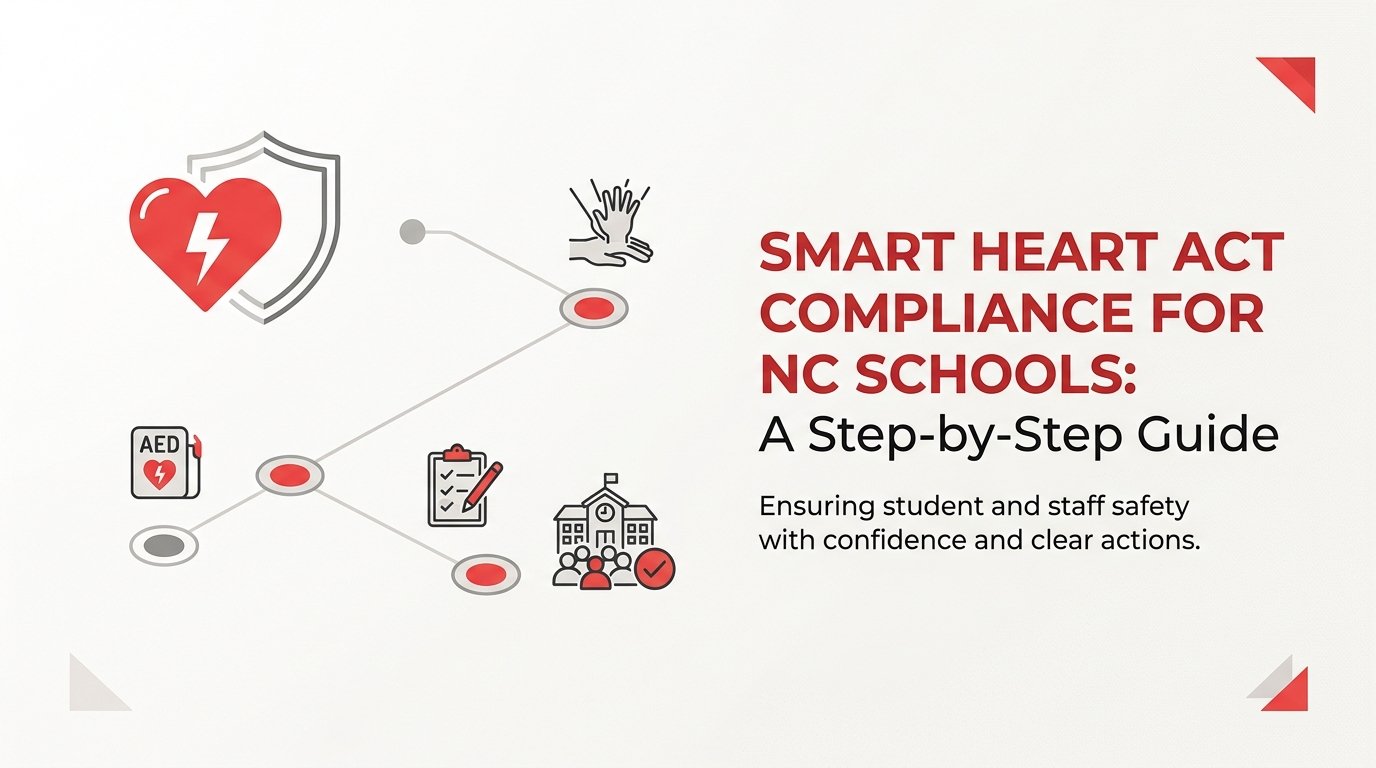
Smart Heart Act Compliance for NC Schools: A Step-by-Step Guide
North Carolina's Smart Heart Act requires public schools to meet specific standards for AED placement, staff CPR and AED training, and emergency response planning. This step-by-step guide helps school administrators, athletic directors, and nurses move from uncertainty to full Smart Heart Act compliance for NC schools with confidence.
7 Smart Strategies for BLS Recertification in Raleigh
This guide outlines seven practical strategies to help Raleigh-area healthcare professionals navigate BLS recertification with confidence — from choosing the right AHA-approved training provider to timing your renewal and preparing your team for group recertification. Whether you are renewing for the first time or the fifth, these tips are designed to save time, reduce stress, and ensure your certification stays current.
7 Smart Strategies to Find the Right BLS Certification Near Me
Finding a quality BLS certification near me requires more than a simple Google search—this guide outlines seven practical strategies to help healthcare professionals identify accredited, employer-approved courses that fit their schedule, location, and learning style while ensuring they develop the genuine life-saving skills that BLS training is designed to provide.
How to Renew Your ACLS Certification: A Step-by-Step Guide
This step-by-step guide explains how to renew ACLS certification for nurses, physicians, paramedics, and other healthcare professionals — covering everything from checking your current status to completing renewal training, whether your certification is current or has already lapsed.
7 Proven Strategies for Choosing the Right CPR Class for Hospitals
Choosing the right CPR class for hospitals goes far beyond checking a compliance box — the wrong program can create scheduling chaos, miss accreditation requirements, and leave staff underprepared for real clinical emergencies. This article outlines seven practical strategies to help hospital administrators and nurse managers select, schedule, and maximize a training program that builds genuine, measurable competence across every unit.
CPR Certification Requirements for Healthcare Workers: What You Need to Know
CPR certification requirements for healthcare workers are professional obligations enforced by employers, licensing boards, and accrediting bodies — not optional formalities. This guide covers which AHA courses apply to each clinical role, the consequences of lapsed credentials, and practical strategies for staying current without disrupting your schedule.
7 Smart Strategies for Choosing CPR Certification in Durham, NC
This guide presents seven practical strategies for selecting the best CPR certification program in Durham, NC, helping nurses, fitness trainers, business owners, and first-time learners verify credentials, compare training formats, and find flexible scheduling. By following these strategies, readers can make a confident, informed decision and walk away with a recognized, job-ready certification.
CPR Certification Expired: What to Do Next (Step-by-Step Guide)
If your CPR certification expired, you don't need to start over — renewal is simpler than most people expect. This step-by-step guide walks you through verifying your lapsed status, choosing the right renewal course, and quickly restoring your credentials whether you hold a BLS, Heartsaver, or advanced certification.
CPR Training with Physical Limitations: A Step-by-Step Guide to Getting Certified
CPR Training With Physical Limitations is fully achievable thanks to American Heart Association guidelines that recognize technique adaptations based on physical ability. This step-by-step guide shows you how to communicate your needs, identify supportive training providers, and earn your CPR certification regardless of your physical condition.
PALS Certification Price: What You'll Actually Pay and Why It Varies
PALS certification price is not standardized — while the American Heart Association sets the curriculum, individual training centers set their own fees based on location, format, and included materials. This article breaks down every factor that drives cost differences so healthcare professionals can evaluate providers confidently and choose the best value, not just the lowest price.
7 Proven Strategies to Get Your PALS Certification in NC Without the Stress
For healthcare professionals in North Carolina, PALS certification is both a career requirement and a clinical responsibility. This article breaks down seven proven strategies to help NC providers choose the right training format, prepare for skills testing, and complete their Pals Certification Nc with confidence and minimal stress.
Advanced Cardiovascular Life Support Training: What It Is and Who Needs It
Advanced cardiovascular life support training is a scenario-driven certification that equips nurses, paramedics, physicians, and other healthcare professionals with the clinical skills and team-coordination strategies needed to manage life-threatening cardiac emergencies. This article explains what ACLS involves, who needs it, and how to choose and maintain the right certification format for your role.
BLS Certification for Nurses: A Step-by-Step Guide to Meeting Requirements
This step-by-step guide breaks down BLS certification for nurses requirements, covering everything from choosing the right course format to renewal timelines, helping RNs, LPNs, and travel nurses meet employer and licensing board standards efficiently. Learn how to avoid common mistakes like selecting an unrecognized course or letting your certification lapse before your next assignment.
Emergency Cardiovascular Care: What It Is, Why It Matters, and How to Be Ready
Emergency cardiovascular care (ECC) encompasses the full spectrum of life-saving interventions—from bystander recognition and CPR to advanced hospital treatment—designed to prevent death and disability from sudden cardiac events. This guide explains how ECC works as a coordinated system, why the minutes before paramedics arrive are often most critical, and how everyday people can prepare to respond effectively when a cardiac emergency strikes in any setting.
CPR Certification for Nurses: What You Need to Know Before You Renew
Nurses renewing their CPR certification need to understand that not all courses meet hospital credentialing requirements—specifically, most employers require the American Heart Association BLS for Healthcare Providers certification rather than a basic lay-responder course. This guide covers everything nurses need to know about CPR certification for nurses, including which courses qualify, how to fit training into a demanding schedule, and how to avoid compliance gaps that could delay employment or put patient care at risk.
How Long Does BLS Certification Take? A Complete Time Breakdown
BLS certification doesn't have to be an all-day commitment — for most healthcare professionals, it takes just a few hours depending on the format and whether you're a first-time learner or renewing. This guide breaks down realistic time ranges for every BLS certification format so nurses, EMTs, and administrators can plan ahead with confidence.
7 Strategies to Get the Most Out of One on One CPR Training
One on one CPR training provides personalized, instructor-focused instruction that adapts to your skill level, schedule, and specific needs—whether you're a healthcare professional, parent, or first-time learner. This guide outlines seven practical strategies to help you prepare effectively, engage fully during your session, and walk away with genuine confidence and a certification that reflects real, life-saving competency.
7 Proven Strategies to Get Fast CPR Certification Without Cutting Corners
Achieving fast CPR certification doesn't mean compromising on quality—by choosing the right course format, provider, and preparation approach, healthcare professionals, teachers, and business owners can earn a valid, American Heart Association-recognized certification in as little as one day. This guide outlines seven practical strategies to help you navigate your options and get certified quickly without sacrificing the hands-on training that makes CPR skills genuinely effective.
7 Proven Strategies for Flexible CPR Scheduling That Actually Work
Flexible CPR scheduling has expanded beyond traditional classroom settings, offering healthcare professionals, business owners, and busy individuals multiple training formats—including onsite group sessions, one-on-one home instruction, and fast-track options—to fit certification into demanding schedules without compromising quality or validity.
How to Renew a Lapsed Healthcare Worker Certification: Step-by-Step Guide
Renewing a healthcare worker certification lapsed beyond its expiration date is more manageable than most professionals expect, with clear steps to quickly restore compliance. This guide covers how to assess your current status, choose the right renewal course for BLS, ACLS, PALS, or CPR, and get recertified fast through flexible scheduling options available to North Carolina healthcare professionals.
PALS Certification Requirements for Nurses: What You Need to Know
PALS certification requirements for nurses include completing an American Heart Association-approved training program that covers pediatric emergency response, life-threatening scenarios, and advanced life support skills. This guide explains who needs PALS certification, what the training involves, and how nurses can obtain and maintain this essential credential for working in high-acuity pediatric care settings.
7 Proven Strategies to Get the Most Out of Onsite CPR Training for Your Team
Onsite CPR training brings certified instruction directly to your workplace, helping employees build life-saving skills in the environment where they're most likely to use them. This guide outlines seven proven strategies to help organizations maximize training effectiveness, improve retention, and build a genuinely prepared workforce ready to respond confidently during cardiac emergencies.
How to Get BLS Certification as a Physical Therapist: A Step-by-Step Guide
BLS certification for physical therapists is both a professional requirement and a critical clinical skill that prepares you to respond effectively when patients experience cardiac arrest or respiratory emergencies. This step-by-step guide covers how to choose the right course format, what to expect during training, and how to meet employer and licensing requirements efficiently.
7 Proven Strategies for Effective Corporate CPR Training
Corporate CPR training is a critical investment in workforce safety, yet many companies struggle to implement programs that produce lasting skills. This guide outlines seven proven strategies to help HR managers and safety officers build effective, practical training programs that keep employees prepared to respond confidently during cardiac emergencies.
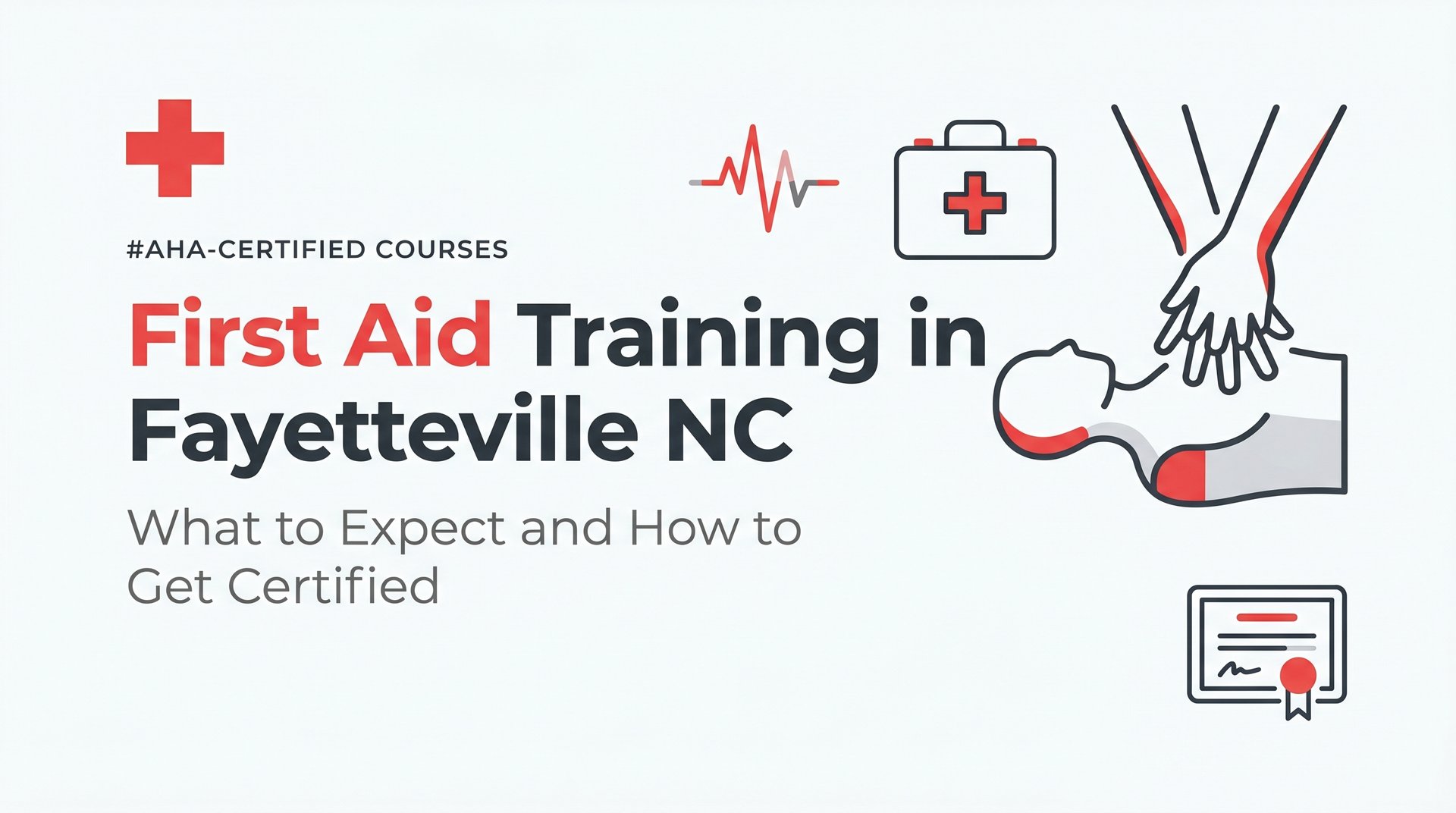
First Aid Training in Fayetteville NC: What to Expect and How to Get Certified
First aid training in Fayetteville NC is more accessible than ever, with flexible, AHA-certified courses available through local providers like Best Emergency Services Training for individuals, healthcare professionals, and organizations. This guide covers what to expect from certification programs, who should get trained, and how to choose the right course to confidently respond when emergencies happen.
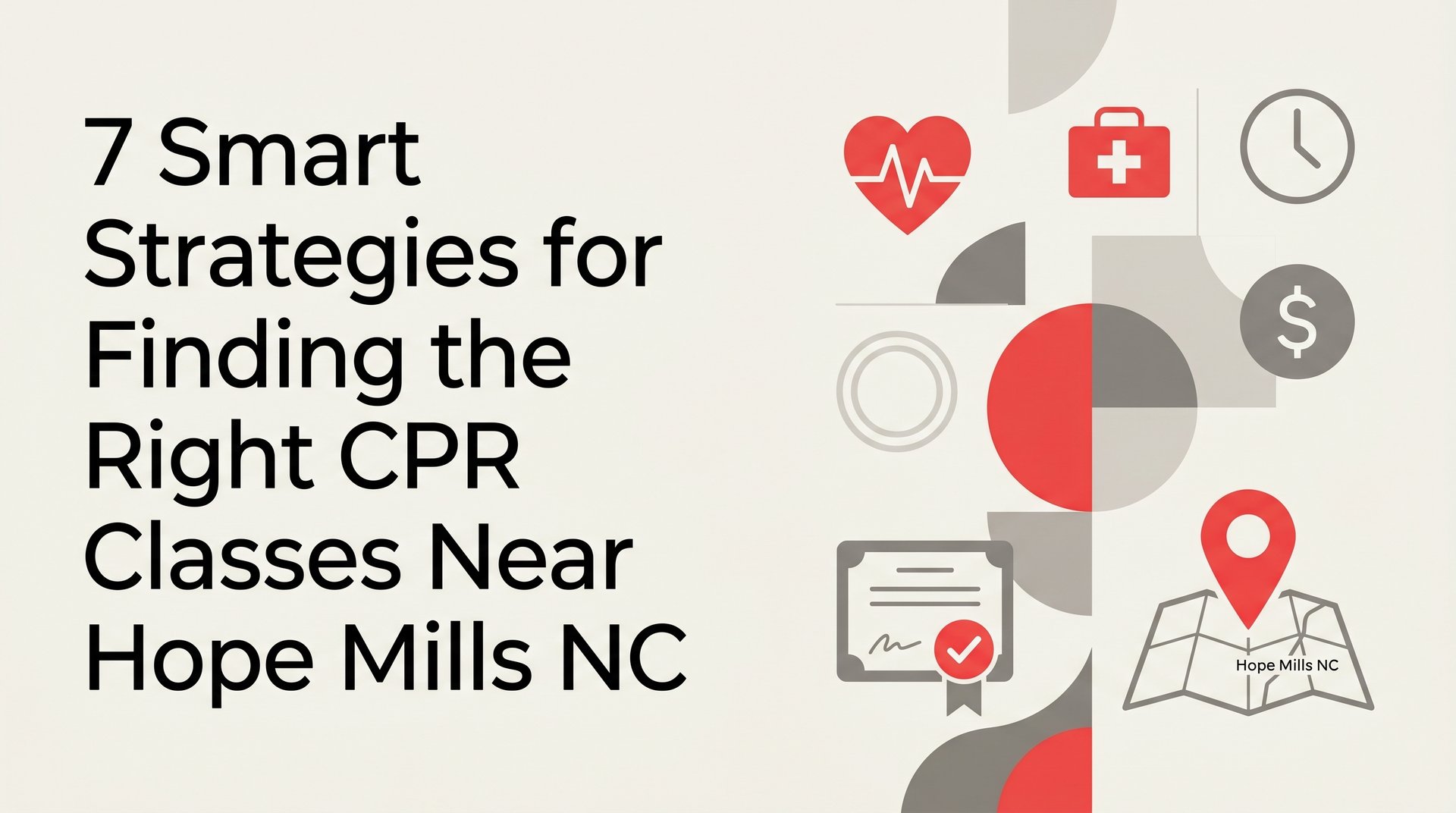
7 Smart Strategies for Finding the Right CPR Classes Near Hope Mills NC
Hope Mills and Fayetteville-area residents can navigate the crowded CPR training landscape more effectively by following seven practical strategies for finding CPR classes near Hope Mills NC that match their schedule, budget, and employer certification requirements. The guide helps nurses, teachers, parents, and other community members avoid wasted time and unrecognized certifications by identifying what to look for before enrolling.
How to Find and Complete an AHA Certified CPR Class in Fayetteville: A Step-by-Step Guide
Finding an AHA certified CPR class in Fayetteville is straightforward when you know where to look, and this step-by-step guide walks healthcare professionals, military families, teachers, and community members through locating accredited providers, understanding certification requirements, and completing training that is recognized by employers and licensing boards nationwide.
How to Get Your CPR Certification in Fayetteville, NC: A Step-by-Step Guide
Getting your CPR certification in Fayetteville, NC is simpler than you might think, and this step-by-step guide walks you through everything from choosing the right American Heart Association course to storing your certification card. Best Emergency Services Training offers flexible scheduling and multiple course formats to help Fayetteville residents and healthcare professionals get certified with confidence.
CPR Training with Physical Limitations: What You Need to Know Before You Start
CPR training with physical limitations is more accessible than most people assume, and this guide breaks down what individuals with back injuries, arthritis, mobility challenges, or other conditions need to know before enrolling. Learn how to communicate your needs, what accommodations reputable training providers can offer, and why a physical challenge should never be a barrier to earning or maintaining your CPR certification.
7 Proven Strategies to Choose the Right ACLS Course in North Carolina
Healthcare professionals in North Carolina can use these seven proven strategies to evaluate and select the right ACLS course in North Carolina based on certification needs, schedule flexibility, and learning preferences. The guide covers everything from understanding ACLS requirements to comparing blended learning formats, helping nurses, physicians, paramedics, and respiratory therapists make confident enrollment decisions that protect both their credentials and patient outcomes.
NAEMT Certification Course: What It Is, Who Needs It, and How to Get Certified
NAEMT certification courses offer EMS professionals and first responders a pathway to advanced clinical credentials that go beyond basic licensure requirements. This guide breaks down what NAEMT certification courses are, which ones align with different career goals, and how to get certified through the National Association of Emergency Medical Technicians.
ACLS for Physicians: What It Covers, Why It Matters, and How to Get Certified
ACLS for physicians goes beyond basic certification, providing a structured, algorithm-driven framework that equips doctors to lead resuscitation efforts, coordinate team responses, and make rapid, evidence-based decisions during cardiac emergencies. This guide covers what the certification includes, why it remains clinically relevant across specialties, and how physicians can efficiently complete or renew their ACLS training.
ACLS Algorithm Study Guide: How to Master Every Protocol Before Your Certification
This ACLS algorithm study guide provides healthcare professionals a structured framework for mastering every ACLS protocol before certification, focusing on decision-making skills over rote memorization. Covering prioritization strategies, scenario simulation, and megacode preparation, it gives nurses, paramedics, and physicians a repeatable study method that builds genuine clinical competence for both first-time certification and renewal courses.
7 Proven Strategies to Get Your PHTLS Certification in NC
Emergency medical professionals in North Carolina can advance their trauma care skills and career prospects by earning PHTLS certification NC employers increasingly require. This guide outlines seven proven strategies to navigate prerequisites, coursework, and scheduling challenges—helping paramedics, EMTs, nurses, and physicians efficiently obtain and maintain their Prehospital Trauma Life Support credentials.
ACLS Certification Requirements: What You Need to Know Before You Enroll
Understanding ACLS certification requirements before enrolling saves healthcare professionals time and prevents the frustration of arriving unprepared or ineligible. This guide breaks down who qualifies, what prerequisite knowledge is expected, how initial certification differs from renewal, and exactly what skills and knowledge will be assessed throughout the course.
How to Enroll in an ACLS Course: A Step-by-Step Guide
Healthcare professionals looking to enroll in an ACLS course will find this step-by-step guide invaluable, covering everything from eligibility requirements and format selection to prerequisites and what to expect on course day. It simplifies the enrollment process for both initial certification and renewal, helping nurses, physicians, paramedics, and other clinical providers gain the Advanced Cardiovascular Life Support skills needed to manage life-threatening emergencies confidently.
7 Smart Strategies for Getting the Most Out of Private CPR Instruction
Private CPR instruction offers personalized, flexible training that goes beyond simply earning a certification card—but maximizing that experience requires a strategic approach. This guide outlines seven practical strategies to help healthcare professionals, caregivers, and individuals get genuine hands-on competence from their private sessions, ensuring they leave with both the credential and the real-world confidence to use it effectively.
CPR Certification Cost: What to Expect and What You're Actually Paying For
CPR certification cost varies widely depending on course type, provider, and format, making it difficult to know what you're actually getting for your money. This guide breaks down the key factors that drive price differences—from online-only courses to AHA-accredited in-person training—so you can make an informed decision based on real value rather than just the lowest number.
How to Renew Your BLS Certification: A Step-by-Step Guide
Learning how to renew BLS certification is straightforward when you understand the full process, from verifying your current status to completing the hands-on skills assessment. This step-by-step guide walks healthcare professionals through every stage of renewal, helping you stay compliant with employer, licensing, and credentialing requirements before your certification lapses.
7 Proven Strategies to Get Your BLS Certification in Chapel Hill
Healthcare professionals and residents seeking BLS certification in Chapel Hill will find seven practical strategies in this guide to efficiently earn or renew their certification without disrupting busy schedules. From selecting the right course format to preparing for certification day, this resource helps nurses, EMTs, medical students, and community members navigate the process with confidence.
CPR AED Certification: What It Covers, Who Needs It, and How to Get Certified
CPR AED certification equips individuals with the skills to perform cardiopulmonary resuscitation and operate an automated external defibrillator during cardiac emergencies. This guide covers what the certification includes, which industries and roles require it, and how to get certified to meet workplace safety standards and potentially save a life.
PALS for Pediatric Nurses: What It Is, Why It Matters, and How to Get Certified
PALS for pediatric nurses is a critical certification that equips nurses with the structured, evidence-based skills needed to respond confidently during life-threatening pediatric emergencies. This guide covers everything nurses need to know about the course content, clinical value, and steps to earn and maintain PALS certification in high-acuity care settings.
7 Proven Strategies to Find the Best CPR Class in Raleigh
Finding the best CPR class in Raleigh requires more than a quick Google search—accreditation, hands-on practice time, and course type all determine whether your certification will be accepted by employers or licensing boards. This guide outlines seven practical strategies to help nurses, teachers, parents, and professionals evaluate Raleigh CPR providers and choose training that meets their specific needs and requirements.
Expired ACLS Certification Renewal: A Step-by-Step Guide to Getting Back on Track
Healthcare professionals whose ACLS certification has lapsed can navigate the expired ACLS certification renewal process with confidence using this comprehensive step-by-step guide. It covers everything from verifying your expiration status to completing recertification quickly, helping nurses, physicians, and other clinicians return to compliance with minimal career disruption.
BLS for Healthcare Providers: What It Covers, Who Needs It, and How to Get Certified
BLS for healthcare providers is a specialized American Heart Association certification designed for clinical professionals—including nurses, physicians, paramedics, and respiratory therapists—who may need to perform resuscitation in high-stakes medical settings. This guide explains what the course covers, which healthcare roles require it, and how to get certified or recertified to meet workplace compliance standards.
7 Proven Strategies to Get Your Same Day CPR Certification
Same day CPR certification allows nurses, fitness trainers, parents, and other individuals to complete accredited American Heart Association training without waiting weeks for an available class. This guide outlines seven proven strategies to help you secure a qualified instructor and earn a fully valid CPR credential on your schedule, whether you need it for professional requirements or personal preparedness.
BLS Certification Cost: What to Expect and What You're Really Paying For
BLS certification cost typically ranges based on course format, provider type, and whether the training carries American Heart Association accreditation. This guide breaks down what drives price differences between providers so healthcare professionals like nurses, EMTs, and medical assistants can make an informed decision and avoid paying for a certification that won't be accepted by their employer.
How to Renew Your CPR Certification: A Step-by-Step Guide
This step-by-step guide simplifies CPR certification renewal for healthcare professionals and trained responders, covering how to check your certification status, choose the right course for your role, and meet all skills and knowledge requirements. From gathering materials to walking away with a valid card, the process is straightforward with flexible scheduling and AHA-aligned instruction available through Best Emergency Services Training.
7 Proven Strategies to Get the Most Out of Your Basic Life Support Course
Maximize your basic life support course by going beyond certification to build genuine competency through proven preparation, engagement, and retention strategies. Whether you're a nurse renewing credentials or a first-time student, these seven practical approaches will ensure your CPR and emergency response skills hold up when real cardiac emergencies demand immediate, confident action.
American Heart Association CPR: What It Is, Why It Matters, and How to Get Certified
American Heart Association CPR certification sets the gold standard for emergency response training in the United States, with guidelines that shape how CPR is taught across healthcare settings, workplaces, and schools. This guide explains what AHA certification involves, why it's widely required by employers and licensing boards, and how to find an accredited course that fits your needs.
7 Proven Strategies to Get the Most Out of AHA Certification Classes
Maximize your investment in AHA certification classes with seven proven strategies covering course selection, preparation techniques, and retention methods that help nurses, paramedics, and healthcare professionals earn BLS, ACLS, PALS, or Heartsaver CPR/AED credentials with greater confidence and efficiency, whether training individually or coordinating certification for an entire team.
How to Meet PALS Certification Requirements: A Step-by-Step Guide for Healthcare Providers
This step-by-step guide breaks down PALS certification requirements for healthcare providers pursuing initial certification or renewal, covering what to expect from the American Heart Association curriculum, hands-on competency assessments, and how to prepare for pediatric emergency scenarios involving infants and children.
AHA BLS Certification: Everything You Need to Know Before You Enroll
This comprehensive guide covers everything healthcare professionals need to know about AHA BLS certification, from why employers specifically require the American Heart Association's version to how the skills-based curriculum prepares you for real emergencies. Whether you're enrolling for the first time or renewing before a deadline, you'll find clear guidance on what to expect from the course, how to choose a training site, and how to stay compliant with your employer's requirements.
7 Smart Strategies for Making the Most of Weekend CPR Classes
Weekend CPR classes offer busy professionals, parents, and educators a flexible path to earning or renewing life-saving certifications without disrupting their weekday schedules. This guide outlines seven practical strategies to help you choose the right course, prepare effectively, and maximize your training experience so you leave with genuine confidence and competence in CPR skills.
What Is PALS Certification? A Complete Guide for Healthcare Professionals
PALS certification is a specialized credential developed by the American Heart Association that trains healthcare professionals to confidently manage life-threatening emergencies in pediatric patients. Understanding what PALS certification involves — from its core protocols to who needs it — is essential for providers working in emergency, critical care, or any setting where children may require advanced resuscitation and stabilization.
How to Complete Your BLS Certification Renewal: A Step-by-Step Guide
This step-by-step guide walks healthcare professionals through the BLS certification renewal process, clarifying common misconceptions—including that renewal actually means completing the full BLS Provider course again—while covering how to check certification status, understand updated guidelines, and successfully complete recertification without confusion.
7 Proven Strategies to Make Your ACLS Recertification Near Me Search a Success
Healthcare professionals searching for ACLS recertification near me can streamline the renewal process with seven proven strategies covering course format selection, AHA-authorized provider evaluation, and effective preparation techniques. This guide helps clinicians maintain uninterrupted credentials every two years while balancing demanding shift schedules and ensuring confidence in high-stakes cardiac emergencies.
Healthcare Provider CPR Course: What It Covers, Who Needs It, and How to Get Certified
A healthcare provider CPR course delivers specialized, clinical-grade resuscitation training for medical professionals—including nurses, paramedics, and therapists—who must respond to life-threatening emergencies as part of their daily work. This guide covers exactly what the course includes, which healthcare roles require certification, and how to get certified to meet the higher performance standards expected in professional medical settings.
How to Get Your Home CPR Certification: A Step-by-Step Guide
Home CPR certification allows busy professionals, parents, and caregivers to learn life-saving CPR skills from the comfort of their own home, without sacrificing quality or official recognition. This step-by-step guide covers everything from choosing the right program to completing your skills assessment and receiving your certification card, making it easier than ever to be prepared for emergencies.
7 Proven Strategies for Organizing Effective Group BLS Training
Coordinating group BLS training for your entire team becomes significantly more manageable with proven strategies covering scheduling, format selection, and hands-on skill development. This guide helps training coordinators and managers efficiently certify multiple team members while ensuring participants gain genuine life-saving competency rather than simply completing a compliance requirement.
Hands On CPR Training: Why Practice-Based Learning Saves More Lives
Hands on CPR training goes beyond memorizing guidelines by giving learners the physical experience of performing chest compressions on a manikin, building the muscle memory and instinct needed to respond effectively in a real emergency. This practice-based approach is why the American Heart Association requires in-person skills components for provider certifications — because executing proper technique under pressure requires more than theoretical knowledge.
7 Proven Strategies to Earn Your ACLS Certification in North Carolina
Healthcare professionals seeking ACLS certification in North Carolina can streamline the process with seven proven strategies that cover choosing the right course provider, mastering AHA guidelines, and fitting training into a busy clinical schedule. This guide helps nurses, paramedics, physicians, and respiratory therapists pass their exam on the first attempt while building cardiac emergency response skills that directly improve patient outcomes.
ACLS Certification Cost: What You'll Actually Pay in 2026
ACLS certification cost varies widely depending on your training format, provider, and what's included—ranging from budget online options to comprehensive in-person courses. This guide breaks down what healthcare professionals will actually pay in 2026, explains the hidden fees to watch for, and helps you find the best value without sacrificing the quality training you need for real clinical emergencies.