Basic Life Support certification, commonly called BLS, is a credential from the American Heart Association that proves you can recognize cardiac arrest, deliver high-quality CPR, and operate an AED until advanced medical help takes over. It is the baseline resuscitation training expected of nurses, physicians, EMTs, dental staff, and many other healthcare workers. This article breaks down what the course actually teaches, who is required to hold it, how it compares to Heartsaver, ACLS, and PALS, and what the certification and renewal process looks like in practice.
What BLS Certification Actually Covers
BLS is an American Heart Association course built specifically for healthcare providers and students entering clinical fields. The curriculum covers adult, child, and infant CPR, proper use of an AED, and how to relieve choking in each of those age groups. Unlike general public CPR awareness classes, BLS assumes you may be working alongside other trained responders in a clinical setting, so the content reflects that reality.
A significant part of BLS training focuses on team-based resuscitation. You will practice high-performance CPR, which emphasizes minimizing interruptions in chest compressions, rotating compressors to avoid fatigue, and coordinating roles during a code. Two-rescuer CPR scenarios are a core component, since most in-hospital or clinical resuscitation efforts involve more than one trained provider working together with clear communication and defined responsibilities.
BLS is also distinctly skills-based. Completing the course requires passing a written exam that tests your understanding of the chain of survival, compression and ventilation ratios, and AED protocols, but that is only half of it. You also have to demonstrate your skills in person, showing correct hand placement, compression depth and rate, airway management, and AED application on a manikin while an instructor evaluates your technique. A course that only involves watching a video and answering multiple-choice questions is not equivalent to BLS certification, and most employers will not accept it as such. The combination of cognitive and psychomotor testing is what separates BLS from lighter introductory CPR programs, and it is why hands-on instruction time matters as much as the lecture portion.
Who Needs BLS Certification and Why
Hospitals, EMS agencies, dental practices, nursing homes, medical and nursing schools, and outpatient clinics typically require BLS certification as a condition of employment or clinical rotation. In many of these settings, holding a current BLS card is tied directly to licensure, credentialing, or the ability to participate in patient care activities, so it is not optional paperwork. It is a functional requirement built into how the facility operates.
It helps to understand that BLS is not the same course as Heartsaver CPR/AED. Heartsaver is designed for laypeople, teachers, fitness instructors, childcare workers, and other non-medical employees who need CPR skills to meet a workplace or state requirement but do not work in direct patient care. BLS, by contrast, is built for people expected to respond to cardiac emergencies as part of a clinical team, with content and pacing that reflects a healthcare environment. If your job description involves patient contact or you are enrolled in a clinical training program, BLS is almost always the correct course, not Heartsaver.
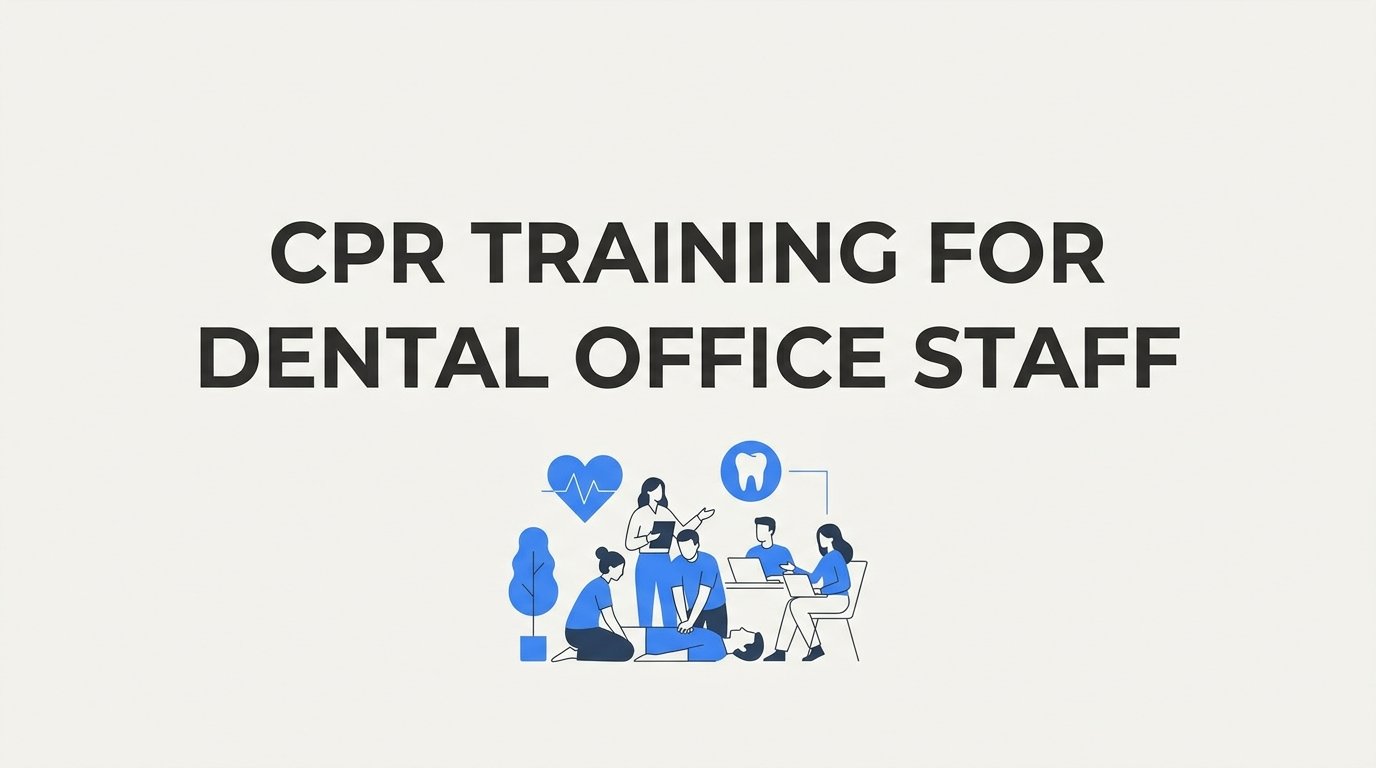
It is also worth noting that BLS requirements are not limited to clinicians. Dental assistants, physical therapy aides, medical office staff, and other non-clinical support roles are frequently required to hold BLS certification by employer policy, even when no state or federal law mandates it for that specific position. Employers often set this bar because these staff members work in proximity to patients and may need to respond before a licensed provider arrives. If you are unsure which course your role requires, check with your employer or program director directly, since requirements vary by facility, state, and specialty.
How BLS Differs From ACLS and PALS
BLS is a prerequisite for both Advanced Cardiovascular Life Support (ACLS) and Pediatric Advanced Life Support (PALS). Those advanced courses assume you already have solid CPR and AED fundamentals in place, and they build on that foundation with more complex content, including emergency medications, advanced airway management, and rhythm interpretation on a cardiac monitor.
The two advanced certifications also split by patient population. ACLS is focused on adult cardiac emergencies, covering topics like recognizing and treating cardiac arrest rhythms, managing acute coronary syndromes, and coordinating a code team using pharmacology and advanced interventions. PALS covers the same general territory but for infants and children, since pediatric physiology, dosing, and arrest rhythms differ enough from adult cases to require a separate curriculum and separate certification.
Because of this layered structure, most facilities require staff to hold current BLS before they are permitted to enroll in ACLS or PALS. This is not just an administrative formality. The advanced courses move quickly through their material, and they assume you can already perform compressions correctly, operate an AED without hesitation, and recognize the signs of cardiac arrest without needing that material re-taught. Skipping ahead without a strong BLS foundation makes ACLS and PALS considerably harder to pass and can leave gaps in the basic skills that advanced providers are expected to already have automatic.
Common Misconceptions About BLS Training
One of the most frequent mistakes is assuming that any CPR class satisfies a BLS requirement for employment or school enrollment. General public CPR courses, workplace Heartsaver training, and community awareness classes are valuable, but they are not interchangeable with BLS. Employers and clinical programs generally specify BLS by name, and submitting the wrong certificate can delay onboarding or clinical placement.
Another common misconception is that BLS certification does not expire once earned. AHA BLS provider cards are valid for two years from the completion date, after which you need to renew to keep your certification active. As of 2026, this two-year cycle remains the standard, but requirements can shift, so it is worth confirming current guidelines with the American Heart Association or your employer if you are unsure of your exact renewal window.
A third misunderstanding involves fully online completion. Some courses market themselves as complete BLS certification delivered entirely online, with no in-person component. Most hospitals, EMS agencies, and clinical programs do not accept this format, because BLS is designed to include a hands-on skills check evaluated by a live instructor. Online-only modules can sometimes serve as the cognitive portion of a blended learning course, but you still need to complete an in-person skills session to receive a card that employers will recognize.
What to Expect in a BLS Course
A typical BLS course follows a two-part structure. The first part covers the cognitive content, either through an eLearning module you complete beforehand or through classroom-style lecture, walking through the chain of survival, compression and ventilation ratios, AED operation, and choking relief for adults, children, and infants. The second part is hands-on: you practice compressions, rescue breaths, and AED use on manikins, then demonstrate those skills to an instructor who confirms you meet the standard before signing off on your certification.
Course length generally runs a few hours total, though the exact time depends on the format and your prior experience. Blended learning options let you complete the cognitive portion online at your own pace and then attend a shorter in-person session focused entirely on skills testing, which works well for people with tight schedules. Traditional in-person classroom sessions cover both portions in one sitting. Onsite group sessions are common for hospital departments, dental offices, and school cohorts that need multiple staff certified at once.
Best Emergency Services Training builds its BLS offerings around this need for flexibility. Options include onsite group training for entire departments or organizations, multiple offsite locations for individuals who prefer to come to a set training site, and one-on-one home instruction for those who need a more personalized pace or who have physical limitations that make a standard classroom setting difficult. Scheduling is designed to work around shift schedules, school deadlines, and last-minute certification needs, so you are not stuck waiting weeks for the next open class slot.
Renewing Your BLS Certification
AHA BLS cards must be renewed every two years to remain valid. Letting your card lapse can create real problems if your job or clinical program requires continuous, active certification, since an expired card may prevent you from working shifts, participating in clinical rotations, or maintaining licensure standing depending on your facility's policy. Because specific requirements can vary by employer and by state, it is worth checking current guidelines directly with your workplace or program as of 2026 rather than assuming your renewal window matches a coworker's.
Renewal courses are generally shorter than the initial certification course. Since you already have the foundational knowledge and skills, renewal focuses on reviewing key techniques, refreshing any updated AHA guidelines, and confirming you can still perform compressions, ventilations, and AED use correctly under evaluation. This makes renewal a faster process than starting from scratch, but it still requires the same hands-on skills check as your original certification.
The best practice is to schedule your renewal before your card expires, not after. Waiting until the last minute increases the risk of a gap between your old card's expiration and your renewal completion, which can create employment complications even if the lapse is brief. Building renewal into your calendar a few weeks ahead of your expiration date gives you room to find a convenient time slot without the pressure of a looming deadline.
Staying Current Without the Scheduling Headache
BLS certification is not a one-time credential you earn and forget. It is a foundational, renewable skill set that healthcare workers, caregivers, and support staff are expected to keep current throughout their careers, whether you are a new nursing student, a dental hygienist, or a hospital employee returning for your next renewal cycle. Treating it as an ongoing part of your professional maintenance, rather than a box to check once, keeps you ready for both your employer's requirements and the moments when those skills actually matter.
Don't let certification deadlines stress you out. Get your AHA, ECSI, or HSI-certified CPR training completed quickly with flexible scheduling that works around your life. Schedule your personalized training session today and join the thousands of individuals and businesses who trust Best Emergency Services Training for fast, convenient certification with expert instructors.